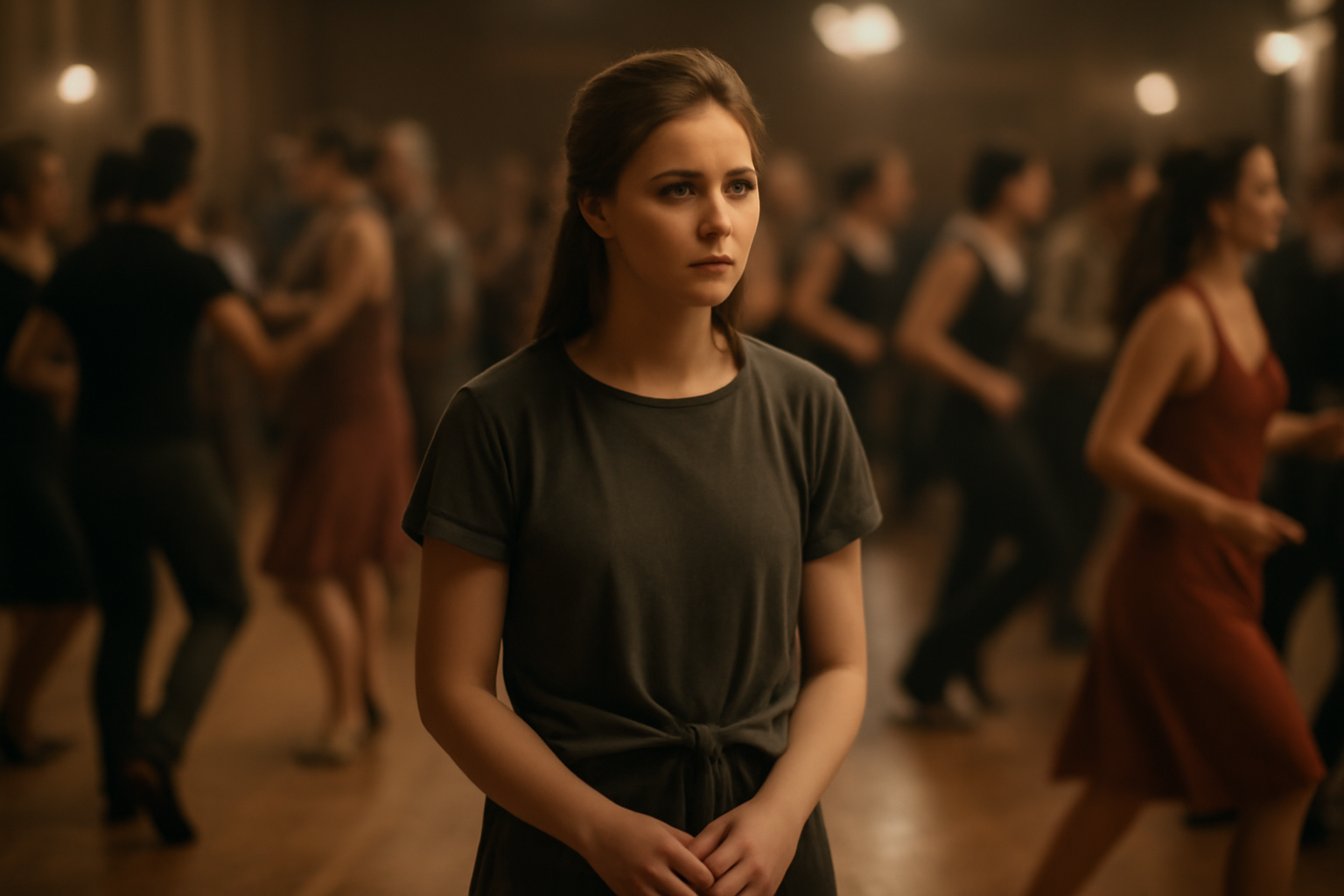
Almost every confident dancer you admire once stood at the edge of the floor, palms sweaty, unsure where to put their feet. That flutter of nerves is not a sign dancing isn’t for you — it means you’re ready to grow. One simple fact matters most: dancing is for absolutely everyone, regardless of age, fitness level, or prior experience.
Why Learning to Dance Is Worth Every Nervous Step
Learning how to dance benefits you far beyond the dance floor. Working through beginner dance steps improves coordination, posture, stamina, and social confidence. Dance is self-expression — a conversation between your body, the music, and the people around you. Committing to learning to dance also builds patience and resilience. Each time a rhythm clicks or a step feels natural, confidence accumulates, and the person shifting nervously at the edge of the floor becomes the one others admire.
What You Will Learn in This Guide
This guide is designed for dance for beginners — no prior experience required. You will explore:
- Posture and body awareness — carrying yourself with confidence and alignment.
- Rhythm and musicality — feeling the beat and letting sound guide movement.
- Basic dance moves and foundational footwork — core patterns focused on precision over speed.
- Flexibility, balance, and stamina — building a safe physical foundation.
- Confidence and mindset — consistent practice to silence self-doubt and find your style.
Every Expert Was Once a Beginner
Give yourself permission to be imperfect — imperfection is the learning process working as it should. Students who practice regularly, even once or twice a week, typically feel a significant confidence surge within months. Steps click, rhythm feels intuitive, and what once seemed impossible becomes second nature. Your dance journey starts right here.
Core Foundations of Dance: Posture, Rhythm, and Confidence
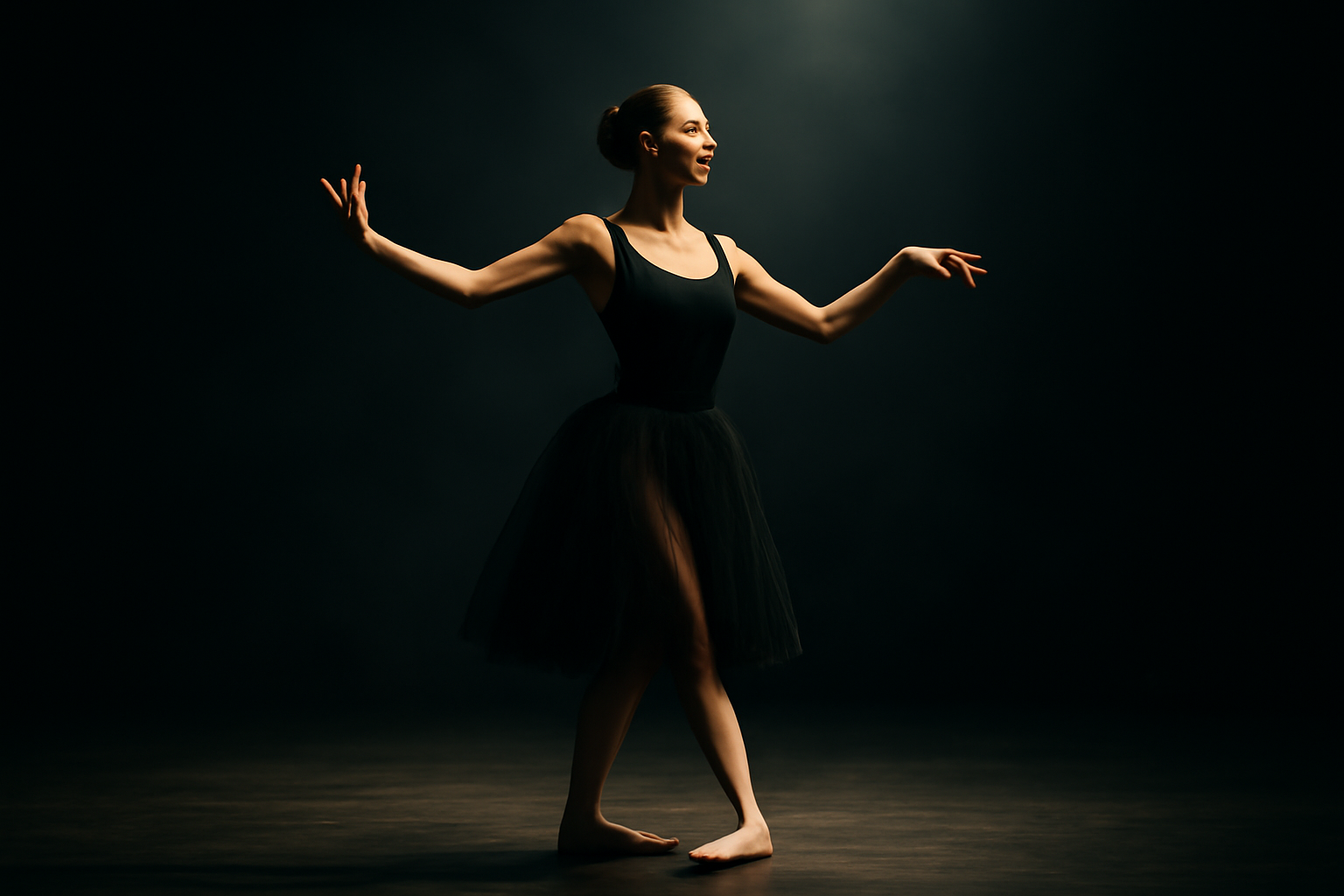
Every dancer builds ability on three pillars: posture, rhythm, and confidence. Master these before tackling footwork or partner holds and every lesson becomes faster, safer, and more enjoyable.
Dance Posture: Your Foundation for Every Move
Good posture transfers across all dance styles. It prevents injury, improves balance, and enables fluid movement. Use this cue: imagine a string pulling upward from the crown of your head. Shoulders roll back, chest lifts, core engages, weight centers over both feet.
🌟 Try This: The Wall Alignment Drill
- Stand with heels, glutes, shoulder blades, and head against a wall.
- Hold for 30 seconds, breathing naturally.
- Step away and carry that alignment as you walk.
- Repeat daily to build muscle memory.
Balance Drills That Build a Dancer’s Stability
☕ Try This: The Coffee-Brew Balance Challenge
- Level 1 — Balance on one foot for 30 seconds. Switch legs.
- Level 2 — Close your eyes to sharpen proprioception.
- Level 3 — Draw slow ankle circles to build joint stability.
Rhythm Basics: Learning to Hear and Feel the Beat
Most popular music is in 4/4 time — four beats per measure. Dance styles like swing and salsa use 8-count phrases (two measures grouped together). Recognizing these structures lets your body anticipate the music rather than react late.
🎵 Try This: The Rhythm Reps Method
- Play a favorite song and tap your foot or clap to the beat.
- Count out loud: “1, 2, 3, 4 — 1, 2, 3, 4.”
- Step forward on 1 and 3; step back on 2 and 4 — the foundation of dozens of styles.
- Repeat across different genres to train your ear.
Quick-Reference: The Three Foundational Pillars at a Glance
| Foundation | What It Means in Practice | Daily Exercise | Key Benefit You Will Notice |
|---|---|---|---|
| Posture & Alignment | Shoulders back, chest lifted, core engaged, weight centered | 30-second wall drill; mirror check | Graceful, injury-free movement |
| Balance & Stability | Controlling weight during transitions and turns | Single-leg holds; ankle circles | Smoother transitions and turn control |
| Rhythm & Musicality | Identifying the beat and moving in sync with music | Clap to a song; count 1–2–3–4 aloud | Natural, expressive movement |
Building Confidence in Dancing: Small Wins Add Up Fast
Confidence accumulates through repeated small victories — finding the beat without counting, holding posture through a full song. A few mindset shifts that accelerate progress:
- Embrace the stumble. Mistakes show you exactly where to focus next.
- Practice with music you love. Emotional connection speeds up rhythm internalization.
- Celebrate consistency, not perfection. Two 20-minute sessions weekly outperform rare marathon practices.
- Focus on feeling, not performing. Enjoy the movement before worrying how it looks.
Mastering Isolation: Precision in Movement
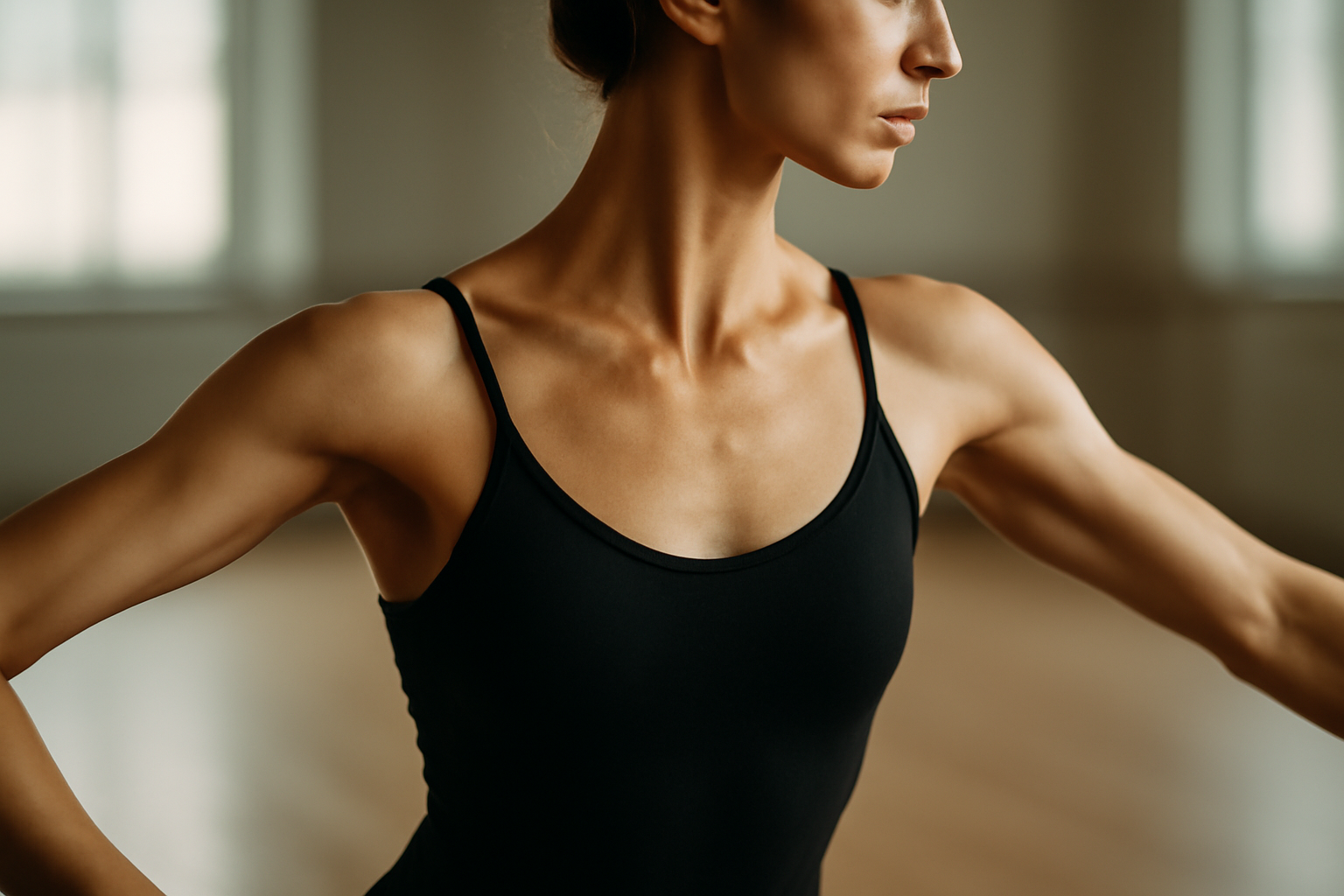
Body isolation is one of the most transformative skills you can develop as a dancer. It sharpens body awareness, elevates movement control, and gives every gesture a clarity audiences can feel from across the room.
What Is Body Isolation in Dance?
Isolation means moving one body part independently while keeping everything else completely still. That contrast amplifies the movement, making it legible to an audience. It underpins everything from sharp hip-hop isolations to the intentional spirals of Graham technique, building body articulation, expressive range, and long-term dance precision.
Why Isolation Exercises Matter
Isolation exercises train your neuromuscular system to distinguish between muscle groups that habitually fire together, rewiring your movement vocabulary so you act with intention rather than momentum. They also build core control that supports complex choreography — every isolated movement still demands a stable, engaged center.
How to Begin: Three Foundational Isolation Exercises
-
Head Isolation
Stand feet hip-width apart, shoulders relaxed. Shift your head right and left, keeping shoulders level. Add forward and back shifts, then slow circular rotations. Use a mirror to catch any shoulder creep immediately.
-
Shoulder Control
Lift one shoulder while keeping the opposite shoulder, head, and hips still. Progress to controlled forward and backward rolls. Resist involving the neck or ribcage — move slowly, prioritizing clarity over speed.
-
Hip Isolation
Stand with soft knees and a neutral spine. Shift hips right without leaning the torso, return to center, then shift left. Progress to forward and back movements, then a four-direction box pattern requiring deliberate core engagement throughout.
Two Practice Approaches Worth Knowing
Approach one: isolate what stays still. Keep one body part stationary while everything else moves freely — training contrast from the inside out.
Approach two: isolate what moves. Move one part expressively while actively holding everything else still. Rotating between both approaches builds complete movement control.
Building Muscle Memory: Patience Is Part of the Process
“Dancing has to be something that you do instinctively. You understand the principle of the exercise, but do not overthink it.”
Neural pathways develop through consistent, low-pressure repetition. Practice isolations while listening to music — passive environments reduce self-consciousness and let rhythm naturally guide your tempo.
From Exercise to Expression
Once the mechanics are internalized, stop thinking about them. Isolation becomes invisible infrastructure, and what remains is expression — clean, precise, and entirely your own.
Building Blocks: Fundamental Dance Moves
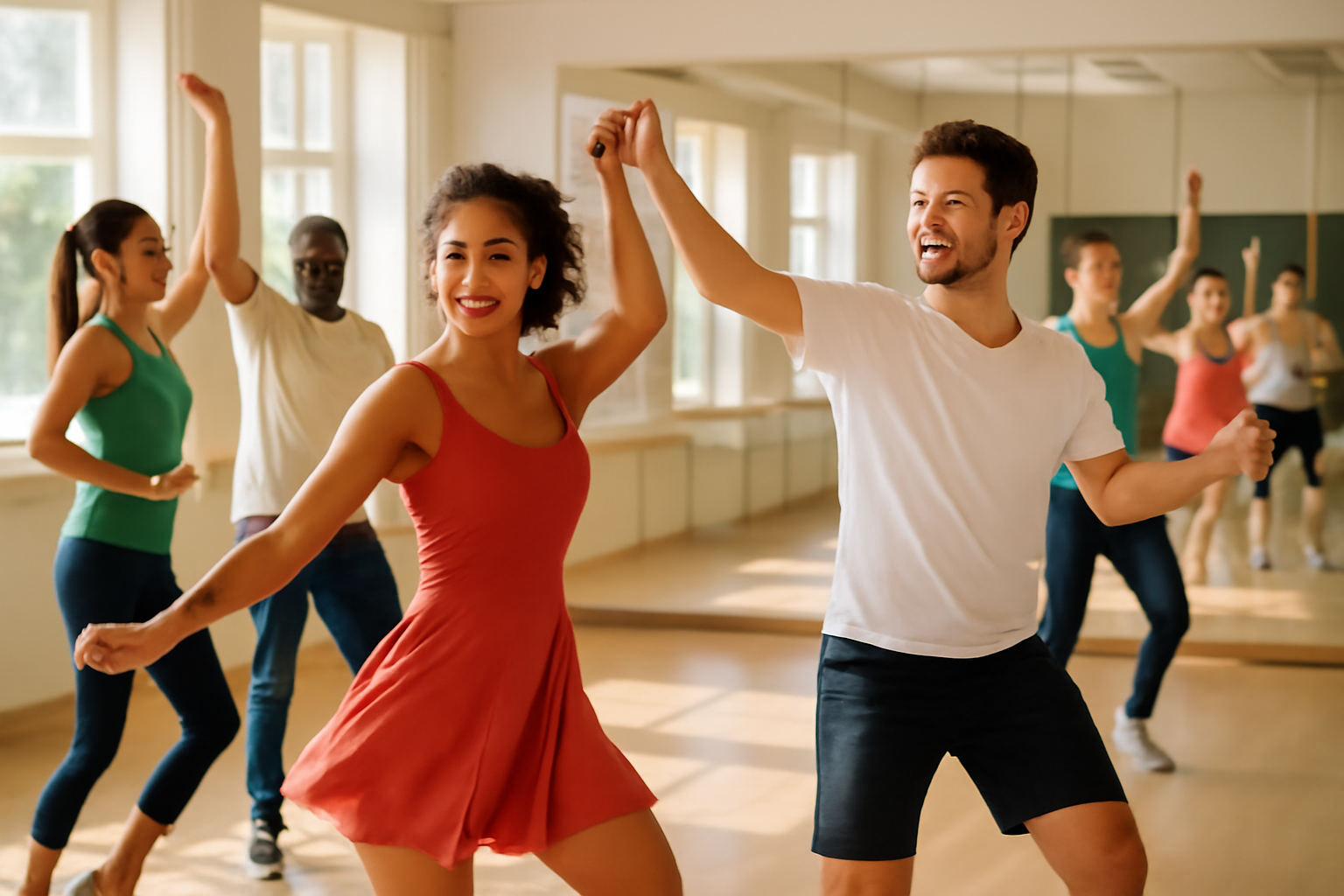
Master a handful of core moves, repeat them until they feel natural, and let your style fill in the rest. Below are four foundational sequences that develop rhythm, fluidity, balance, and musical interaction from your first session.
Beginner Tip: Work through each move in five-to-ten-minute bursts. Build comfort with one move before layering the next.
1. The Two-Step — Your First Rhythm Anchor
Two feet, two directions, one steady beat. Country, ballroom, and hip-hop all trace elements to this pattern.
- Feet together, knees softly bent.
- Step right foot out to the side, landing on the ball of the foot.
- Bring left foot to meet the right.
- Repeat to the left side. Count: Quick — Quick — Slow — Slow.
Practice focus: Keep movements light. Resist looking down — train proprioception from the start.
2. The Box Step — Weight Transfer and Balance Mastery
Your feet trace four corners of an imaginary square. A staple of waltz and foxtrot, it teaches smooth, deliberate weight transfer.
- Feet together, posture tall.
- Step forward with right foot, shifting full weight onto it.
- Bring left foot forward and to the left, hip-width apart.
- Slide right foot to meet left. Reverse: step back with left, then right, close. One full box complete.
Practice focus: Pause briefly at each corner to build body awareness and prevent rushing.
3. The Slide — Developing Fluidity and Spatial Awareness
Rather than lifting the foot, you skim it along the floor with controlled momentum — building the muscular memory needed for fluid transitions.
- Feet together, knees slightly bent.
- Push from left foot; let right foot glide sideways without lifting.
- Drag left foot in to close softly. Repeat in the opposite direction.
- Swing arms gently opposite to the direction of travel for balance.
Practice focus: Socks on hardwood work perfectly. Focus on continuous foot-to-floor connection.
4. The Step-Touch — Musical Interaction and Natural Groove
Used in hip-hop, jazz, and aerobics, this move trains your body to feel music rather than simply count it.
- Feet together, knees generously bent.
- Step right foot out on count one; touch left foot beside it on count two (no weight transfer).
- Step left foot out on count three; touch right foot beside it on count four.
- Let arms swing naturally — a soft bend at the elbow adds character.
Practice focus: Count aloud first: step — touch — step — touch. Once automatic, switch to listening to music — that shift is when dancing truly begins.
Quick-Reference: The Four Foundational Moves at a Glance
Remember: Stumbling Is Part of the Sequence
Every polished dancer has stumbled through these same steps. The misstep, the off-count moment — these are not failures; they are where real learning happens. Repeat in small increments and resist rushing before the current move feels settled.
Consistent practice creates the space where personal style quietly takes root and begins to emerge on its own.
Advancing Techniques: Steps and Turns
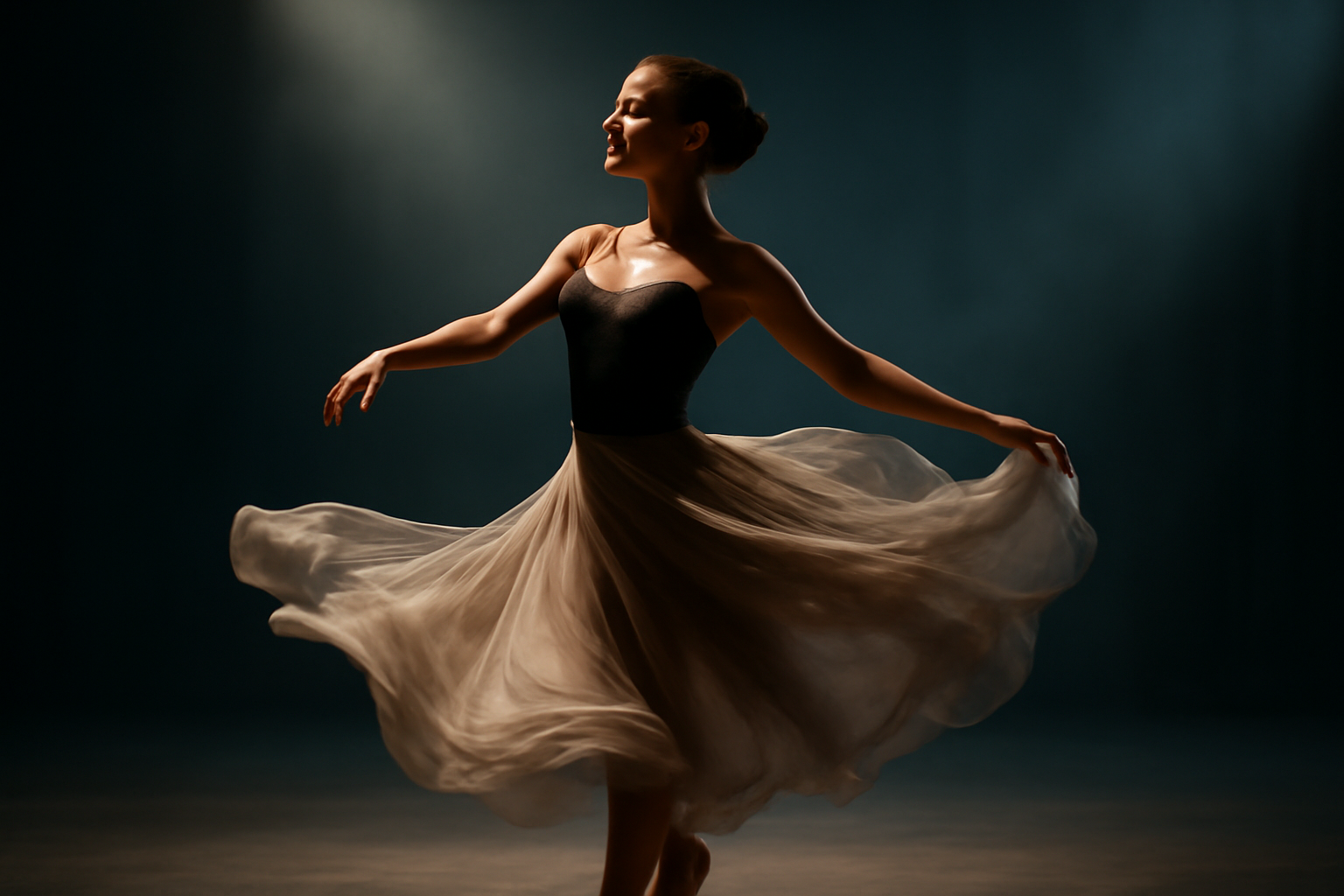
This section bridges foundational jazz steps and the complex, full-body coordination that defines skilled jazz performance — from refined footwork to precise turning technique.
Building on the Basics: Jazz Square and Grapevine
The Jazz Square and Grapevine appear simple but demand rhythmic precision and spatial awareness. Advanced dancers use the Jazz Square’s four-step pattern to punctuate musical phrasing with isolations and syncopated accents. The Grapevine builds hip mobility and rhythmic agility that transfers directly into turning sequences.
- Slow it down first. Walk through each step at half-tempo, focusing on weight placement before adding speed.
- Add isolations gradually. Layer in head or hip accents once footwork is automatic.
- Use music intentionally. Match steps to varying tempos to develop musicality.
Mastering Turn Techniques: Chaîné Turns and the Art of Spotting
Chaîné turns — rapid half-turns on alternating feet — test core strength, spatial awareness, and focus. Clean execution depends on spotting: fixing your gaze on a focal point, then snapping your head back to it after each rotation. Spotting is a neurological training tool that recalibrates how your body processes rotation.
Practical Strategies for Practicing Turns Safely and Consistently
- Begin with stationary spotting drills. Train your head snap to a fixed wall mark before adding body rotation.
- Use a mirror whenever possible. Self-correct posture, arm alignment, and spot accuracy in real time.
- Break movement into components. Practice relevé, arm position, and head snap separately before combining them.
- Build gradually per session. Start with two to three turns, pause, and extend the sequence as your vestibular system adapts.
- Work in straight-line sequences. Four to six traveling Chaîné turns in a 10-foot space — stopping and resetting reinforces control.
- Engage your core first. Draw the navel toward the spine and lift through the sternum before every turn set.
Progressing Into Advanced Turn Vocabulary
With spotting and core engagement established, dancers can pursue à la seconde turns, attitude turns, fouettés, pencil turns, and leg hold turns en dedans and en dehors. Each shares the same requirements — correct spotting, postural alignment, and a strong relevé — while varying the working leg position and balance demand. Advanced technique is not a departure from fundamentals; it is their fullest expression.
Conclusion: Embracing Dance as Expression
The fundamentals you have absorbed are the cornerstones of your entire dance journey — every skilled dancer once stood exactly where you are now.
Building dance confidence is a quiet, consistent accumulation of small victories: a rhythm clapped correctly, a step repeated until it feels natural, a moment when your body moves and your mind simply lets it. Incorporating simple habits into daily life — tapping your foot to a song, swaying as you cook — keeps your connection to movement growing between practice sessions.
Dance expression is inseparably yours. Your personal style, your individual interpretation of rhythm and emotion, your distinctive way of inhabiting a movement — these are not imperfections to be corrected. They are precisely what makes your dancing meaningful. Resist the temptation to measure your expression against anyone else’s.
Research affirms that dance improves self-esteem, reduces anxiety, and builds resilience. The courage developed by learning a routine or performing in front of an audience translates directly into confidence in public speaking, social situations, and new challenges. Dancing freedom is not reserved for the gifted — it is the outcome of consistent practice and a willingness to celebrate progress at every stage.