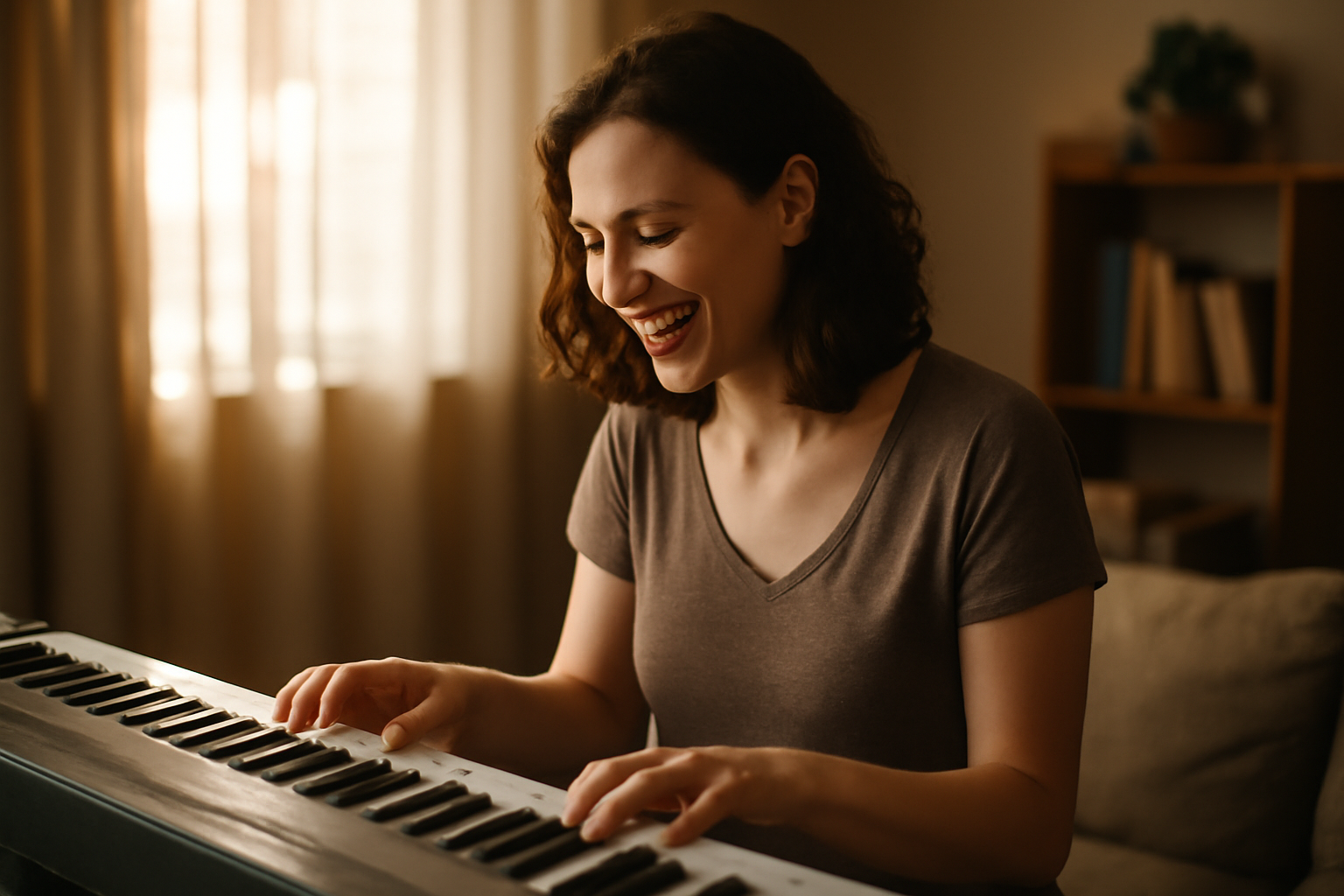
Picture this: Sarah, a 34-year-old graphic designer, sits down at a secondhand keyboard she
picked up over the weekend. She has always wanted to learn piano but convinced herself for
years that it was too late, too expensive, or simply too difficult to start from scratch. Then
a colleague mentions MuseFlow, an AI-driven piano app that promises real-time feedback and a
curriculum built around her exact skill level. Intrigued, Sarah downloads it that same evening.
Within twenty minutes of her very first session, she plays a simple two-hand melody and hears
instant feedback guiding her fingers to the right keys. For the first time, the piano feels
approachable—even exciting.
Sarah’s experience is far from unique. Thousands of adults every year decide to learn piano
without any prior musical background, and many of them share the same concerns: Am I too
old to start? Do I need years of formal lessons? Will I ever understand music theory?
The honest answer to all three questions is reassuring—learning how to play piano as a
beginner is entirely achievable, regardless of age or experience, provided you follow a
structured path and choose the right tools to support your practice.
Learning how to play piano is one of the most enriching journeys a person can undertake. It
is a pursuit that weaves together physical coordination, creative expression, and intellectual
engagement in a way few other hobbies can match. From the moment your fingers press their
first keys, you begin developing skills that span muscle memory, rhythmic awareness, and a
deepening understanding of music theory. These skills build on each other progressively, which
is why establishing a strong foundation from your very first session is so important.
Playing piano well begins with the fundamentals: correct posture at the keyboard, relaxed hand
positioning, and a clear familiarity with how notes, chords, and scales relate to one another
on the keys in front of you. Skipping these early building blocks is a common mistake among
self-taught beginners, and it often leads to frustration or ingrained bad habits that become
harder to correct later. Whether you envision yourself playing classical repertoire, jazz
standards, or your favorite pop songs, every accomplished pianist traces their technique back
to these same essential principles.
The good news for today’s beginners is that the landscape of piano learning has never been
more varied or accessible. Traditional methods—structured lessons, sheet music curricula, and
methodical practice routines—remain as valuable as ever, offering a time-tested progression
that builds well-rounded musicianship. At the same time, a new generation of AI-powered apps
and platforms has made it possible to receive personalized, adaptive instruction at a fraction
of the cost of private tuition. Tools like MuseFlow, Flowkey, and JazzEdge bring real-time
feedback, interactive tutorials, and tailored exercise libraries directly to your device,
making consistent practice easier to fit into a busy schedule.
This comprehensive guide is designed to help you navigate both worlds. You will find practical
advice on posture and technique, a clear overview of the music theory concepts every beginner
needs, and an honest look at the learning methods and digital tools that can accelerate your
progress. Whether you prefer the discipline of a step-by-step structured curriculum or the
flexibility of an AI piano tutor that adapts to your pace, this roadmap will give you
everything you need to move from your very first note to your first complete piece with
confidence.
Getting Started: Familiarize Yourself with Your Instrument

Before you play your first note, take time to simply get comfortable with your piano. Run your fingers across the keys, study the layout, and observe how the instrument is arranged. This early familiarity pays dividends the moment you begin learning your first piece. Whether you have an acoustic upright in your living room or a sleek digital piano on a stand, the foundational knowledge you build now will serve you for years to come.
Understanding the Keyboard Layout and Finding Middle C
The piano keyboard is organized into repeating groups of white and black keys. Black keys appear in alternating clusters of two and three — and these clusters are your most reliable navigation landmarks. Middle C is the white key sitting immediately to the left of any group of two black keys, right in the center of the keyboard. On a standard 88-key acoustic piano, Middle C is the fourth C from the left. On a 61-key keyboard, it falls roughly in the center of the instrument.
Why does Middle C matter so much? It serves as the universal reference point across all sheet music, chord charts, and music theory. Treble clef notation starts just above it; bass clef notation resides just below it. Once you can locate Middle C instantly — without looking twice — the rest of the keyboard begins to make intuitive sense.
Here are a few practical tips for locking in Middle C from day one:
- Use the two-black-key groups as anchors. Every time you sit down, find the group of two black keys nearest the center of your keyboard and place your right thumb on the white key immediately to their left. That is Middle C.
- Label it temporarily. A small removable sticker on Middle C can help beginners build muscle memory during the first few weeks of practice.
- Practice octave recognition. Once you find Middle C, play the C notes one octave above and one octave below it. Notice that they share the same quality of sound — just higher or lower in pitch. This reinforces how the keyboard repeats its pattern across octaves.
Getting to Know the Pedals
Most pianos — acoustic and digital alike — feature three pedals. The rightmost is the sustain pedal, the most important one for beginners. Pressing it allows notes to ring on even after you lift your fingers from the keys. The leftmost is the soft pedal (or una corda), which softens the tone. The middle pedal varies: on acoustic grands it is a sostenuto pedal; on uprights and many digitals, its function differs by model.
One meaningful difference to be aware of: acoustic pianos offer a continuous, gradient range of sustain depending on how deeply you press the pedal. Many entry-level and mid-range digital pianos, by contrast, offer only two or three discrete sustain levels (on, half-on, off). If nuanced pedal work is important to your practice, look for a digital piano that supports continuous half-pedaling, or factor this into your decision when choosing an instrument.
Acoustic vs. Digital Piano: Which Suits Your Lifestyle?
One of the most important decisions any new pianist faces is choosing between an acoustic piano and a digital piano. Neither is universally superior — the right choice depends on your budget, living situation, goals, and how deeply you plan to pursue the instrument.
An acoustic piano produces sound by channeling finger pressure through hammers that strike strings. The resulting vibrations travel to a soundboard and resonate through the entire body of the instrument, creating a warm, rich, and dynamically nuanced tone. Crucially, an acoustic piano offers a virtually infinite range of sound colors — the way you touch the key changes not just the volume but the character of every single note. This makes it the preferred instrument for serious students and professional pianists alike.
A digital piano, on the other hand, uses sensors to detect key movement and plays back digitally recorded grand piano samples through speakers. While high-end models from manufacturers like Yamaha, Roland, Kawai, and Casio feature weighted hammer actions that closely approximate the feel of an acoustic, there is an important acoustic limitation: because the sounds are digitally reproduced, there is a finite number of tones the instrument can produce. Playing a key more softly or differently may not always yield an audibly different shade of tone in the way an acoustic piano would respond.
That said, for beginners, digital pianos are an excellent starting point. They require no tuning, are generally far more affordable, work with headphones for quiet practice, and are portable enough to fit almost any home. Many accomplished pianists began on digital instruments and transitioned to acoustics later as their technique matured.
| Feature | Acoustic Piano | Digital Piano |
|---|---|---|
| Sound Production | Hammers strike strings; soundboard resonates naturally | Sensors trigger digitally recorded samples via speakers |
| Touch Sensitivity | Infinite dynamic range; key velocity and touch change tone quality | Finite tonal range; high-end models approximate acoustic feel |
| Sound Quality | Richer, warmer, more resonant; natural string harmonics | Varies by model; top-tier digitals can match low-end acoustics |
| Pedal Response | Continuous, gradient sustain range | Often limited to discrete levels; advanced models offer half-pedaling |
| Maintenance | Requires regular tuning and occasional regulation | Virtually maintenance-free |
| Price Range | $1,000–$3,000+ for entry-level uprights | $200–$500+ for beginner models; $1,000–$3,000+ for premium models |
| Portability | Heavy and stationary | Lightweight; many models are fully portable |
| App & Tech Compatibility | Not compatible | MIDI/USB connectivity; works with learning apps |
| Headphone Use | Not available | Headphone output for silent practice |
| Best For | Serious students, intermediate to advanced players | Beginners, players with space or budget constraints |
Enhancing Your Learning with Piano Apps
One of the most compelling advantages of digital pianos is their compatibility with modern learning technology. Most digital pianos feature USB or MIDI connectivity, allowing them to communicate directly with smartphone and tablet apps designed to accelerate your progress.
Apps like Skoove listen to you play in real time and provide instant, interactive feedback — identifying wrong notes, highlighting correct fingering, and adjusting lesson pacing to match your ability. This kind of AI-assisted learning effectively gives beginners access to guided instruction at any hour of the day, bridging the gap between formal lessons.
Beyond feedback, many apps include visual keyboard overlays that illuminate which keys to press, interactive music theory lessons, and song libraries ranging from classical to contemporary. For a complete beginner still orienting themselves to the keyboard layout, these tools transform what can feel like an overwhelming instrument into an approachable, even entertaining, learning environment.
“Some of my best students have digital pianos and sound fantastic because of their dedication and practice. In the end, it’s the student’s passion for sound that makes the biggest difference.”
— Nicki Adams, Piano Teacher
The first step in your piano journey is simply spending time with your instrument — not rushing toward pieces or scales, but learning its geography, its feel, and its voice. Find Middle C. Press the sustain pedal and listen to how long the sound lingers. Connect your digital piano to a learning app and explore a few notes. The more comfortable and curious you become at this early stage, the more confident and expressive you will be as you progress.
Mastering Proper Posture and Hand Positioning
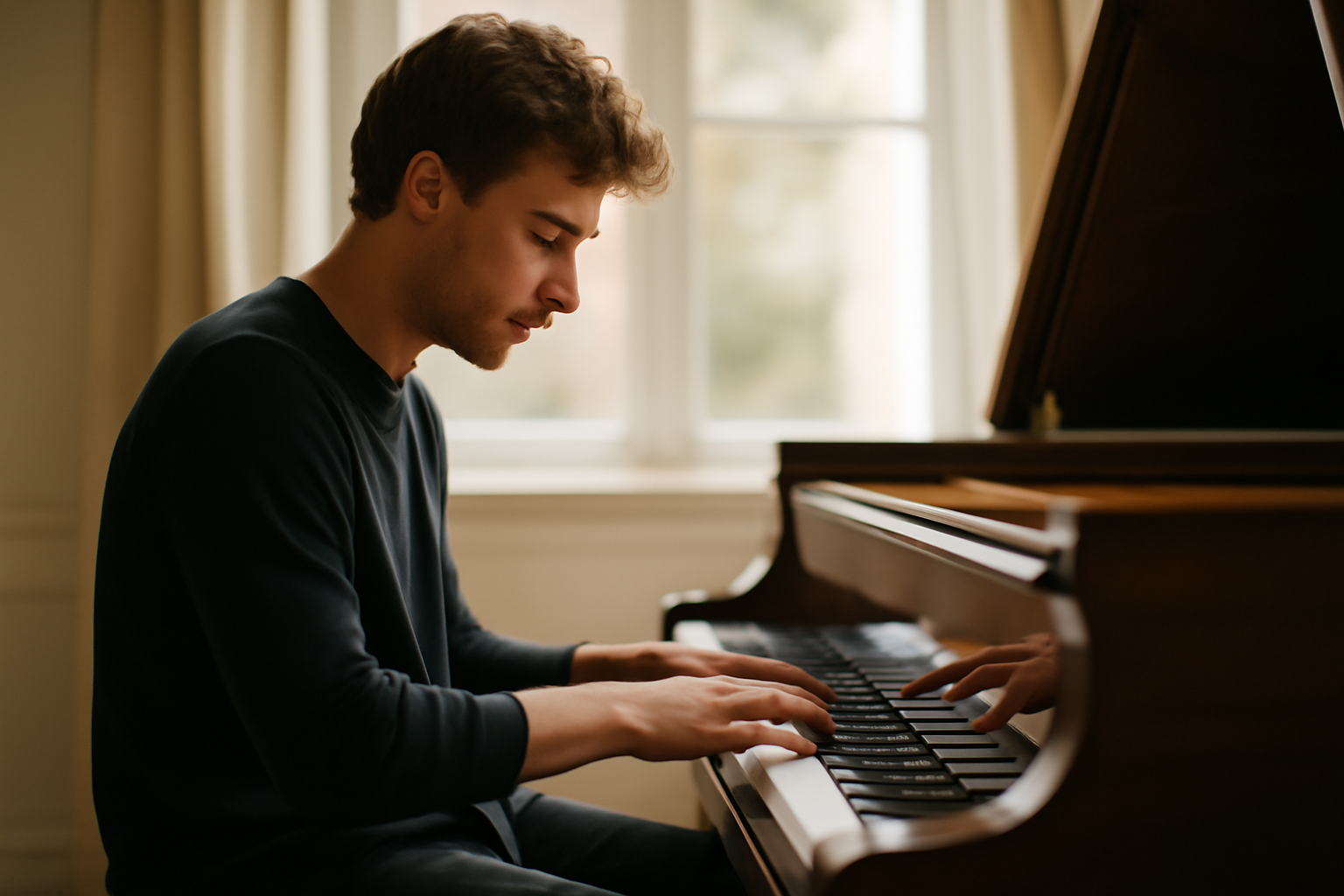
Correct posture and technique are fundamental to effective piano playing and avoiding long-term strain. Many beginners focus entirely on learning notes and melodies, overlooking the physical foundation that makes expressive, injury-free performance possible. Establishing good habits early is not just helpful — it is essential for lasting success at the instrument.
Finding the Right Sitting Position
Your relationship with the piano bench directly shapes your playing before you even touch a key. Sit toward the front half of the bench, centered in front of the keyboard near middle C. Keep your back straight, your shoulders relaxed, and allow your upper arms to hang naturally from your body. Avoid leaning forward; your body weight should be supported directly beneath your shoulders and neck to prevent tension from building up during longer practice sessions.
Your knees should sit just beneath the keyboard — not too close, not too far back — and your feet should rest flat on the floor, heel to toe. This grounded sitting position gives you stability and allows energy to travel freely from your core all the way through to your fingertips.
Setting the Correct Bench Height
Bench height is one of the most overlooked elements of proper piano form, yet it has a direct impact on wrist position and overall comfort. Adjust your bench so that your elbows sit at roughly the same level as the keyboard. When seated correctly, your wrists and forearms should be parallel to the ground — think of your hands as a flat tabletop. Sitting too low forces the wrists downward and creates unnecessary strain; sitting too high introduces tension in the shoulders and arms. If your bench runs slightly low, a firm cushion can make an immediate difference.
Positioning Your Hands and Fingers
With your body settled and your bench at the right height, lay your hands gently on either side of the center of the keyboard. The key to proper hand position piano technique lies in the shape of the fingers: curve them naturally, as though you are loosely holding a ball or an egg in the palm of each hand. This soft curve keeps the fingers active and responsive without introducing rigidity.
Your fingers should hover above the middle of the white keys, positioned toward where the black keys begin rather than resting at the very edge of the keys. The thumb makes contact with the key along its left side near the tip, while the remaining fingers use their tips to press the notes. This precise finger placement produces a cleaner, more controlled tone, especially when playing chords.
Keeping Wrists and Elbows Relaxed
Wrist position is central to healthy keyboard posture. Keep your wrists straight and soft — never rigid or collapsed. As your hands travel across the keyboard, your elbows should follow in a smooth, fluid motion rather than locking in place. When reaching outward toward the ends of the keyboard, allow your arms to open naturally. When moving inward, let the wrists soften and turn slightly to avoid unnecessary strain.
A useful technique when pressing individual keys is to allow the finger to drop onto the key rather than striking it. Let the wrist fall slightly with the motion, then allow it to return to its starting position as the finger lifts. This natural, gravity-assisted movement creates a more fluid, expressive sound and reduces the physical effort required to play for extended periods.
Why These Habits Matter
Proper piano technique does more than prevent injury — it actively improves your playing. When your body is aligned and relaxed, energy travels efficiently from your shoulders and arms down through your wrists and into your fingertips. This connected chain of movement gives you access to a wider dynamic range, from the softest pianissimo to a full, resonant forte. Tension anywhere along that chain — in a stiff wrist, a raised shoulder, or a locked elbow — interrupts that flow and limits your expressive capacity.
Forming these foundational habits at the beginning of your piano journey is far easier than correcting ingrained patterns later. Take time at the start of every practice session to check your sitting position, your elbow angle, your wrist alignment, and your finger curve. These brief moments of intentional awareness compound over time, building the physical intelligence that separates effortful playing from truly fluent musicianship.
Playing Your First Notes and Building Foundational Skills
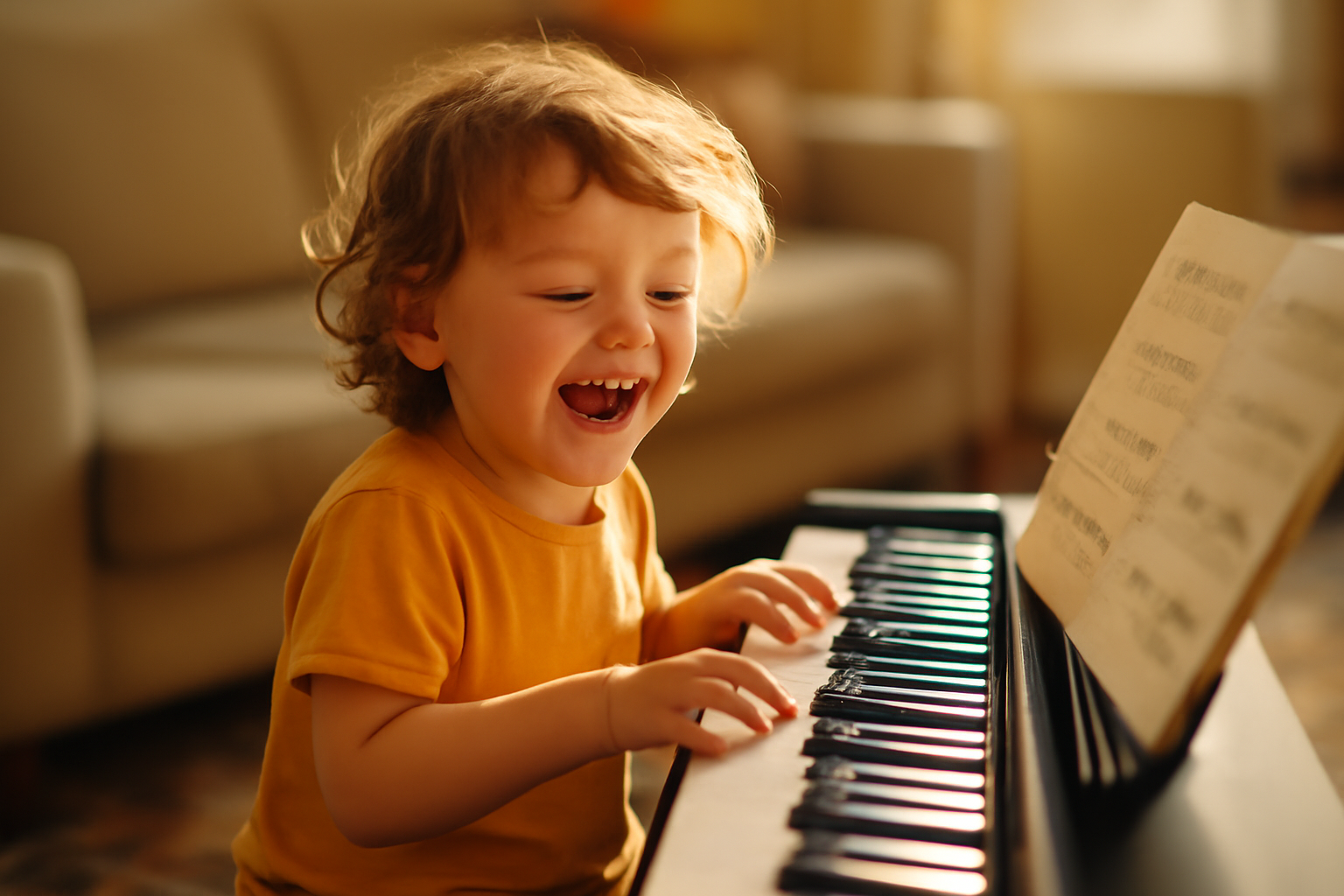
Every piano journey begins at the same place: middle C. This single key, located at the center of your keyboard, serves as the anchor point for nearly everything you will learn. Before you can explore chords, scales, or full songs, you need to train your fingers to move with confidence and independence. The good news is that this process is far more approachable than it looks, especially when you break it down into clear, manageable steps.
Understanding Finger Numbering
Before placing a single finger on the keys, you need to understand finger numbering — the universal shorthand used in all piano sheet music and instructional materials. Both hands are numbered identically:
- Thumb = Finger 1
- Index finger = Finger 2
- Middle finger = Finger 3
- Ring finger = Finger 4
- Pinky = Finger 5
When sheet music instructs you to play a note with “finger 3,” you use your middle finger — on either hand, depending on context. Learning this numbering system early prevents bad habits and makes reading musical notation significantly easier as your skills progress.
Placing Your Right Hand on Middle C
Locate middle C — it sits directly to the left of a group of two black keys, roughly at the center of a full-sized keyboard. Rest your right thumb (finger 1) gently on this key. Your remaining fingers should fall naturally onto the adjacent white keys: finger 2 on D, finger 3 on E, finger 4 on F, and finger 5 on G. Keep your wrist relaxed and slightly elevated, your knuckles rounded, and your forearm parallel to the keyboard. This is your foundational hand position.
Now practice the C-G sequence — playing each note from C through to G in order, one at a time. This five-note pattern introduces you to the first five notes of the C major scale and gives each finger its first assignment. Play slowly and deliberately, pressing each key fully before releasing it. Listen to the tone each note produces. Notice how your hand stays almost entirely in one position — this is the goal of efficient piano technique.
A helpful real-world reference: the opening notes of Mary Had a Little Lamb use exactly this five-finger C position. Mapping exercises onto familiar melodies reinforces your memory and makes practice feel immediately rewarding rather than mechanical.
Bringing In the Left Hand
Once your right hand moves through the C-G sequence comfortably, replicate the same pattern with your left hand. Place your left pinky (finger 5) on middle C, with finger 4 on D, finger 3 on E, finger 2 on F, and your left thumb (finger 1) on G. Work through the sequence from C to G in ascending order, then back down from G to C in descending order. The left hand typically feels more awkward at first — this is entirely normal. Give it equal practice time before moving forward.
Combining Both Hands
Playing both hands simultaneously is the critical milestone most beginners rush toward too quickly. The key is patience. Start by playing just two notes together — the C in your right hand and the C in your left — and practice landing them at exactly the same moment. Gradually expand to the full five-note sequence, ascending and descending with both hands in unison. When both hands feel synchronized and unhurried, you have genuinely internalized the C major scale in its most fundamental form.
Introduction to Scales and Piano Chords
Scales and piano chords are the two pillars of musical vocabulary. A scale is a sequence of notes in a defined pattern — the C major scale, for example, runs C, D, E, F, G, A, B, and back to C, covering a full octave. A chord is three or more notes played simultaneously. The first chord most beginners encounter is C Major, built from C, E, and G played together. If you press C and G on the keyboard and search within the Piano Companion app by Songtive, C Major will appear as the first result — making it an ideal digital reference tool for confirming what you are hearing with your ears.
Understanding how chords emerge from scales is one of the most important insights in music theory. The first chord progression beginners typically learn is I – V7, which in the key of C translates to C Major followed by G7. In practical terms, you play C-E-G for the C chord, then B-F-G for the G7 chord — your hand barely shifts between them. These two chords alone underpin hundreds of songs across every genre.
Reading Sheet Music Basics
Reading music alongside keyboard practice creates a powerful feedback loop. Sheet music uses a staff — five horizontal lines — on which notes are placed to indicate pitch. The treble clef governs the higher notes typically played by the right hand, while the bass clef governs the lower notes played by the left. Notes sitting on the lines and spaces of the treble clef correspond directly to the keys your right hand plays. When you connect a written note to a physical key, you are beginning to develop sight-reading — the ability to play music you have never seen before. This skill compounds rapidly with consistent practice.
Using Apps for Real-Time Feedback
Modern piano learning apps dramatically accelerate foundational skill-building by providing instant, objective feedback that a static book simply cannot offer. Whether you are confirming a chord name, checking a scale fingering, or receiving live correction on your timing, the right app acts as a patient and always-available instructor. The table below compares the most widely used piano learning platforms to help you choose the right tool for your current level and goals:
| Feature | Simply Piano | Flowkey | Skoove | Piano Companion |
|---|---|---|---|---|
| Best For | Visual learners & beginners | All levels, song-focused | Adults, sheet music focus | Chords & scales reference |
| Real-Time Feedback | Yes | Yes | Yes (microphone/MIDI) | No (reference tool) |
| Sheet Music Display | Yes | Yes | Yes (emphasis on notation) | Yes (grand staff view) |
| Chord & Scale Dictionary | Limited | Chord charts included | Limited | Comprehensive |
| Song Library | Large (++ rated) | Large (++ rated) | Moderate | N/A |
| Monthly Price (USD) | $9.99 – $19.99 | $29.99 | $29.99 | Free / $39.99 per year |
| Platform | iOS, Android | iOS, Android, Web | iOS, Android, Web | iOS (iPhone, iPad, Vision) |
For pure chord and scale identification, Piano Companion by Songtive remains one of the most thorough reference tools available. Its reverse-search feature — where you press a combination of keys and it identifies the chord — is particularly valuable when you play something that sounds right but cannot yet name. For structured lessons with real-time correction, Simply Piano excels with beginners due to its clean visual interface and mobile-first design, while Flowkey‘s endorsement from Yamaha and its 4.7-star average across more than 42,000 ratings signal consistent quality for players at any stage.
Building Blocks for Everything That Follows
The skills you develop in this foundational stage — finger independence, scale patterns, basic chord shapes, and the ability to read notation — are not preliminary exercises to rush through. They are the literal building blocks of every piece of music you will ever play. Chord progressions grow from your understanding of individual chords. Complex melodies become readable once you have internalized scale patterns. Your hands’ ability to work independently, then together, is what eventually allows you to play melody with one hand and accompaniment with the other simultaneously.
Invest the time here with patience and consistency. Even fifteen focused minutes of daily practice at this stage will compound into meaningful skill faster than you expect. The piano rewards deliberate effort, and every note you press correctly is another word added to your growing musical vocabulary.
Establishing Effective Practice Routines and Learning Methods
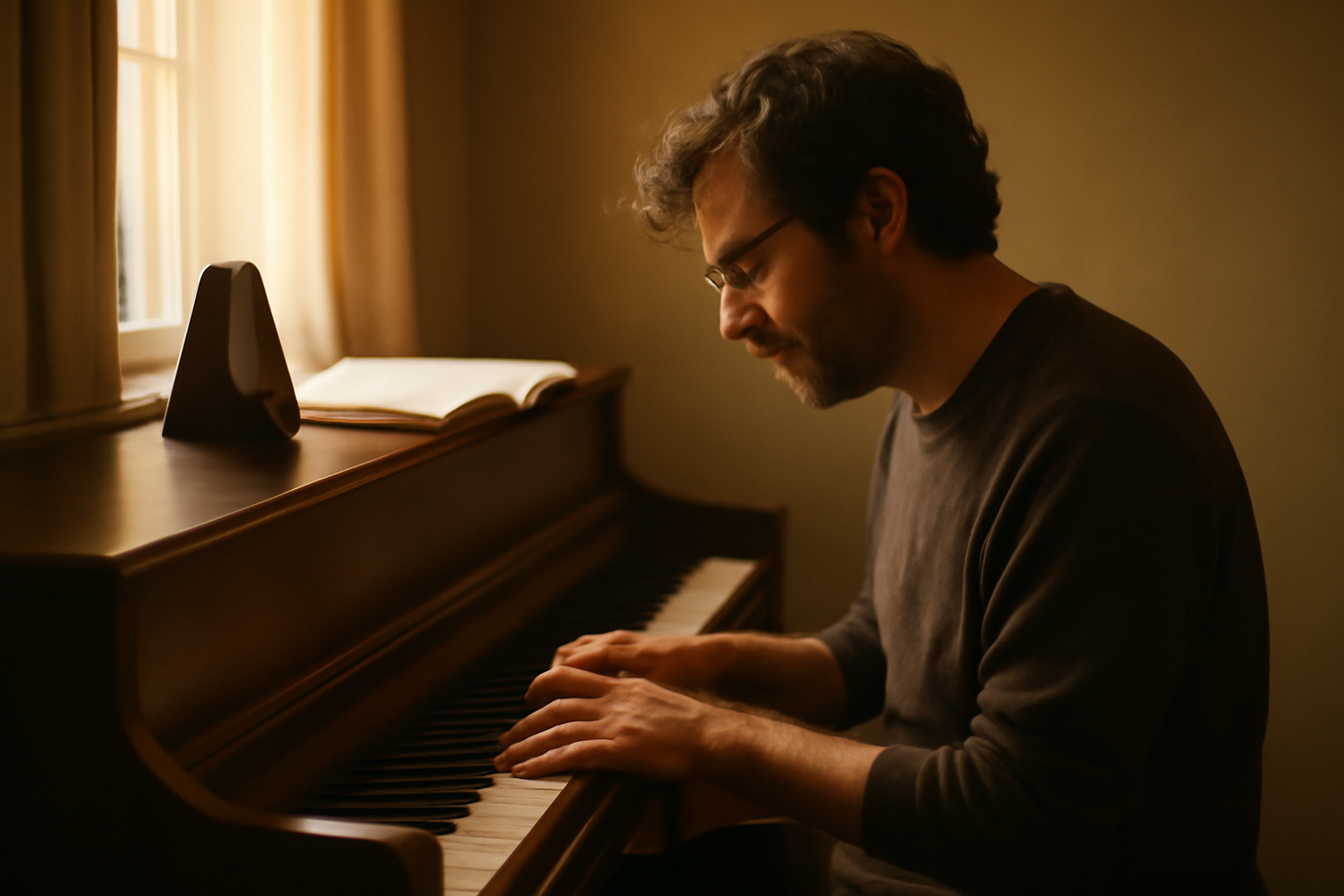
Consistency is the cornerstone of piano mastery. Whether you are a complete beginner sitting down at the keys for the first time or an adult learner returning after years away, how you structure your practice schedule matters far more than how many hours you log. The good news? Modern AI apps and proven pedagogical techniques make building a sustainable routine more achievable than ever.
Quality Over Quantity: The Case for Short Daily Sessions
One of the most persistent myths in piano learning is that longer practice sessions automatically produce faster results. Research and experienced piano teachers consistently point to the opposite conclusion: regular short practice sessions of 20 to 30 minutes per day outperform infrequent marathon sessions in virtually every measurable way. Focused, daily repetition strengthens neural pathways more effectively than sporadic bursts of effort, building the kind of muscle memory that allows passages to feel natural under your fingers.
For adult learners especially, managing expectations is critical. Life is busy, and the pressure to practice for an hour or more can become a psychological barrier that leads to skipping sessions altogether. Committing to just 20 focused minutes each day removes that barrier and keeps momentum alive. Over weeks and months, that consistency compounds into genuine, audible musical progress.
Building a Balanced Practice Structure
A well-designed practice session is not simply sitting down and running through your favorite piece until time runs out. Effective piano practice follows a deliberate arc that addresses multiple skill areas within a single sitting. Consider structuring each session around four core phases:
- Warm-Up (3–5 minutes): Begin with scales, arpeggios, or a simple Hanon exercise to loosen your fingers and orient your mind toward music. Using a metronome here builds internal pulse awareness from the very start of your session.
- Review and Consolidation (8–10 minutes): Return to pieces or passages you have already learned. Reinforcing familiar material solidifies memory and builds confidence before tackling new challenges.
- New Material and Focused Work (10–12 minutes): Dedicate the bulk of your session to new repertoire or technically demanding passages. Work hands separately before combining them, and use slow, deliberate practice with a metronome before building speed.
- Free Play (3–5 minutes): Close each session with unstructured exploration. Improvise, experiment with chords, or simply play something you love. This preserves joy in the process and keeps your relationship with the instrument positive.
Setting Clear, Measurable Goals
Vague intentions like “get better at piano” rarely drive consistent action. Instead, set specific goals for each practice session and for each week. A well-formed session goal might read: “Play the right-hand melody of measures 1 through 8 without a mistake at 60 BPM by the end of today’s practice.” This kind of precision gives your session direction, makes success measurable, and creates a satisfying sense of accomplishment when you achieve it.
Longer-term goals function the same way. Targeting a complete performance of a specific piece by a particular date motivates consistent daily effort and gives your practice schedule a meaningful purpose. AI-powered piano apps excel at helping learners define and track these goals, surfacing performance metrics and trend data that make progress visible in ways that subjective self-assessment rarely can.
The Metronome: Your Most Honest Practice Partner
No single practice tool does more to accelerate progress than the metronome, yet it remains one of the most underused resources available. Practicing with a metronome develops steady pulse, reveals rhythmic inconsistencies that are easy to overlook when playing freely, and provides a reliable framework for gradually increasing tempo. The standard approach is straightforward: learn a passage slowly enough to play it correctly, then incrementally raise the metronome tempo in increments of two to four BPM until you reach the target speed.
Many of today’s top piano apps include built-in metronomes with visual beat indicators, making it easier than ever to integrate tempo control into your learning workflow without switching between separate tools.
Choosing Repertoire That Challenges Without Overwhelming
Selecting the right music is one of the most nuanced decisions in piano learning. Pieces that are too simple fail to develop new skills, while pieces that are too advanced produce frustration and discouragement. Aim for repertoire that sits just beyond your current comfort zone — music that requires genuine effort to master but remains achievable with consistent focused practice.
A useful benchmark: if you can play a piece reasonably well after one or two sessions, it is probably not challenging enough. If you cannot make meaningful progress within a few weeks of dedicated work, it may be worth setting it aside temporarily and building the prerequisite skills first.
AI Apps and Structured Digital Learning
The integration of artificial intelligence into piano learning has genuinely changed what self-directed practice can achieve. Apps like Yousician, Piano Marvel, Flowkey, and Simply Piano offer real-time feedback on note accuracy, timing, and rhythm that was once only available through in-person instruction. For adult learners who cannot commit to a fixed weekly lesson schedule, these tools provide an always-available feedback loop that keeps practice honest and productive.
Among the most advanced offerings in this space is ROLI’s AI Music Coach, which goes beyond analyzing the notes you play to literally observe your hand positioning and finger movement through a camera. This allows the system to address technique issues — poor wrist angle, excessive finger tension, inefficient fingering choices — that note-based feedback alone cannot detect. Lessons adjust their pacing and difficulty in real time based on what the AI sees and hears, creating a dynamic experience that closely resembles working with a human teacher.
Apps like Skoove similarly combine structured lesson pathways with AI-driven feedback, adapting content to your demonstrated skill level and keeping the difficulty curve appropriately challenging. The Practice Analytics dashboards offered by platforms like Yousician and Piano Marvel surface session data — time spent, accuracy trends, problem areas — that help learners understand exactly where to focus their effort.
Comparative Overview of Leading AI Piano Apps
The table below provides a structured comparison of the most widely used AI-assisted piano learning platforms, highlighting the features most relevant to building an effective practice routine.
| App | Real-Time Feedback | Progress Tracking | Dynamic Difficulty | Technique Analysis | Best For |
|---|---|---|---|---|---|
| Piano Marvel | Yes — via MIDI keyboard | Detailed session journals and reports | Adapts exercises to weak areas | Timing and note accuracy | Intermediate learners with MIDI instruments |
| Simply Piano | Yes — via microphone | Daily progress and streak tracking | Structured level progression | Note accuracy and timing | Beginners and early intermediates |
| Flowkey | Yes — microphone and digital piano integration | Practice time logs and song completion | Song difficulty tiers | Note and chord accuracy | Song-focused learners at all levels |
| Yousician | Yes — microphone and MIDI | Detailed analytics dashboard with trends | AI-driven gamified difficulty scaling | Accuracy, timing, and rhythm metrics | Learners who respond well to gamification |
| ROLI AI Music Coach | Yes — camera and audio combined | Adaptive lesson path adjustments | Real-time pacing and content adaptation | Hand positioning and finger movement | Learners prioritizing technique refinement |
Exploring Multiple Learning Avenues
AI apps and digital platforms are powerful, but they work best as part of a broader, multi-channel approach to learning rather than as a complete replacement for other resources. Private instruction with a qualified piano teacher provides personalized guidance, accountability, and the kind of nuanced feedback that even the most sophisticated app cannot yet fully replicate. Even one lesson per month with an experienced teacher can dramatically accelerate progress by identifying and correcting ingrained technical problems before they become difficult habits to break.
Online tutorials — from YouTube channels hosted by professional pianists to structured course platforms — supplement app-based learning with deeper explanations of music theory, technique principles, and interpretive concepts. Combining these resources with consistent daily practice creates a learning ecosystem that addresses the full range of skills required for genuine musical development.
Maintaining Sight-Reading Skills
In an era of apps that show animated falling notes and color-coded keyboards, sight-reading — the ability to interpret and play written sheet music in real time — can become a neglected skill. Yet sight-reading is one of the most powerful capabilities a pianist can develop, dramatically expanding the repertoire you can access independently and deepening your understanding of music as a written language.
Dedicate a small portion of each practice session, even just five minutes, to reading through unfamiliar sheet music. Keep the tempo slow enough to read ahead comfortably, prioritize keeping your eyes on the page rather than your hands, and treat mistakes as information rather than failures. Over time, this daily exposure builds sight-reading fluency that complements everything else you learn through app-based and teacher-guided instruction.
Consistency: The Variable That Changes Everything
Every expert technique, every useful app, and every well-structured practice plan ultimately delivers results only through consistent application. The most effective practice routine is the one you will actually follow. Start with a schedule that fits your real life, protect that time, and trust that steady daily effort accumulates into meaningful musical ability. Progress on the piano is rarely linear — plateaus are normal, breakthroughs are real, and the students who stay patient and consistent are the ones who ultimately play the music they love.
Conclusion: Your Sustainable Path to Piano Mastery

The piano journey is rarely a straight line — it winds through triumphant breakthroughs, humbling plateaus, and quiet moments of pure musical joy. But if there is one insight that rises above all others from the research and strategies explored in this guide, it is this: sustainable progress comes from working smarter, not just longer. Quality of attention, clarity of purpose, and consistency of habit will carry you further than any marathon session of mindless repetition ever could.
By blending correct physical techniques, a genuine understanding of musical concepts, and the disciplined practice habits outlined throughout these pages, you are not simply learning to press keys in the right order. You are constructing a durable framework for piano proficiency — one built brick by deliberate brick, designed to hold up under the pressure of real performance rather than collapse at the first sign of challenge.
Bring Together Everything You Have Learned
Think of your practice routine as a complete ecosystem. Each element depends on and strengthens the others:
- Set clear micro-goals and long-term objectives so every session has direction and every week builds toward something meaningful.
- Use spaced repetition to fight the forgetting curve — shorter, more frequent sessions spread across the week will produce more durable learning than single exhausting marathons.
- Incorporate retrieval practice from day one, treating memorisation not as a finishing step but as an ongoing muscle you flex throughout the learning process.
- Break pieces into manageable sections, tackle the hardest passages first, and resist the temptation to always restart from bar one.
- Warm up intentionally, listen actively, and engage in honest self-evaluation after each session to ensure your habits are moving you forward, not simply keeping you busy.
Embrace Modern Tools Without Losing the Human Touch
Today’s learners have access to an extraordinary range of modern tools — AI-driven apps that provide real-time feedback, digital metronomes, slow-downer software, and progress-tracking platforms that can illuminate your weaknesses with data-driven precision. Use them. A well-chosen app can act as a tireless practice partner, offering the kind of immediate, objective feedback that even the best human teacher cannot always provide between lessons.
That said, technology is most powerful when it complements rather than replaces traditional learning. The attentive ear of an experienced teacher, the interpretive wisdom passed down through musical tradition, and the irreplaceable experience of sitting with a piece over many weeks — these cannot be distilled into an algorithm. The most effective path to piano mastery weaves the two together: leveraging digital tools for efficiency while honouring the depth and nuance that classical pedagogy provides.
Celebrate the Journey, Not Just the Destination
It is easy, especially in the early stages, to measure progress only by what you still cannot play. Resist that instinct. Celebrate small victories — the measure you finally nailed after twenty repetitions, the passage that once felt impossible now sitting comfortably under your fingers, the moment a familiar melody begins to sing with genuine feeling rather than mechanical effort. These milestones matter. They are the evidence that your brain is building new pathways, your fingers are developing memory, and your musical ear is sharpening with every session.
“Ten minutes of practice per day is sixty hours per year. Thirty minutes is one hundred and eighty hours.”
That simple arithmetic is one of the most encouraging truths in music education. Whether you carve out a focused twenty-minute block before breakfast or explore a favourite song in the quiet of an evening, consistency and patience are the twin engines of progress. You do not need limitless time. You need purposeful time, applied repeatedly, over the long arc of genuine commitment.
Your Next Step Starts Now
The methodologies outlined in this guide — from deliberate sectional practice and spaced repetition to goal-setting frameworks and mindful self-evaluation — are not abstract ideals. They are proven, actionable tools that have supported learners at every level, from the adult beginner finding their first chord to the advancing student preparing their first recital. What they all share is a foundation of intentional effort paired with genuine curiosity.
Piano playing, at its heart, is about personal enjoyment and musical expression. It is about the profound human satisfaction of translating feeling into sound, of communicating something wordless and beautiful through your hands. Keep that spirit alive in every practice session — not just when the notes flow easily, but especially when they do not.
Maintain your steady pace. Trust the process. And know that with every session, however modest, you are moving closer to the confident, expressive playing you set out to achieve — from those very first tentative notes all the way to performing complete pieces with conviction, fluency, and joy.