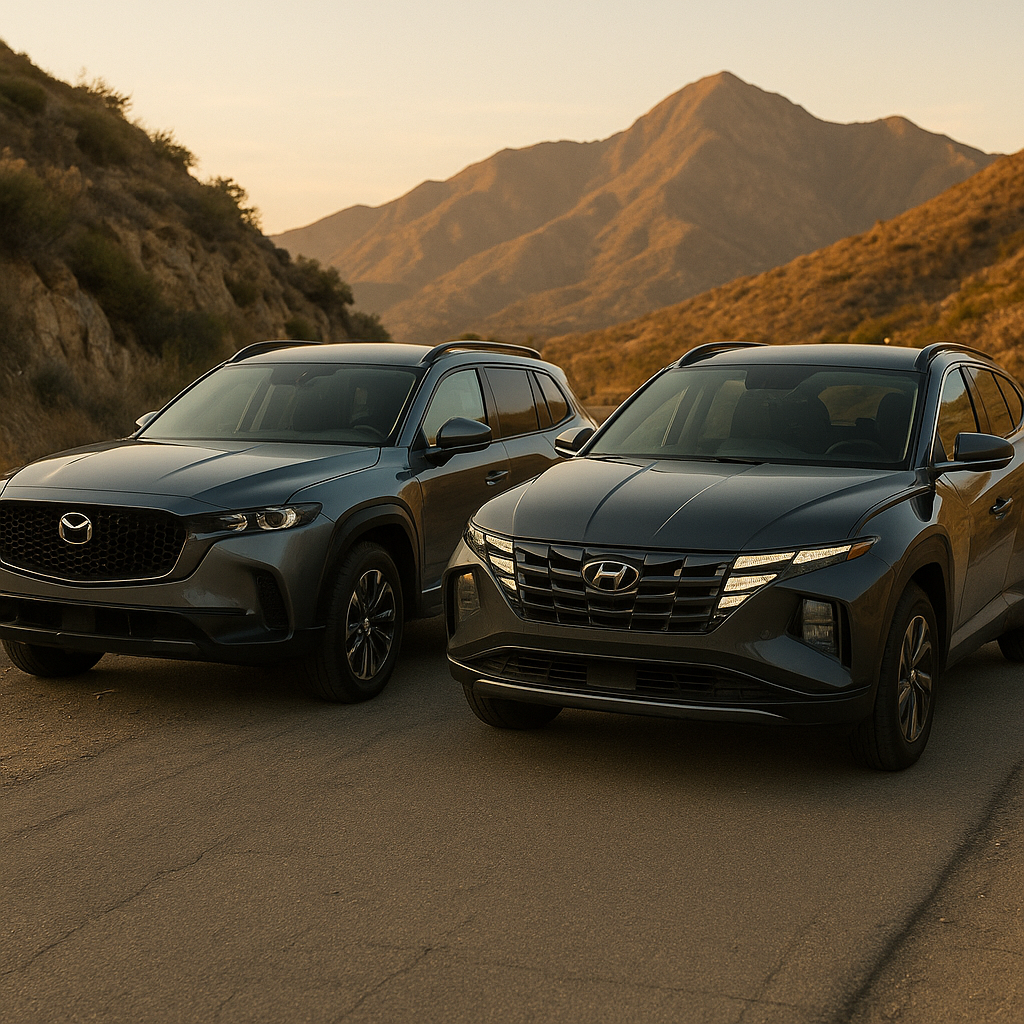
The compact SUV segment continues to be one of the most competitive automotive battlegrounds. The Mazda CX-50 and Hyundai Tucson stand out as compelling options for buyers seeking versatility, style, and value. Both vehicles bring distinct personalities to the table. The Mazda emphasizes driving dynamics and premium feel. The Hyundai focuses on comfort, technology, and practicality.
These two crossovers represent different approaches to the same challenge. How can a compact SUV balance everyday utility with the features modern drivers demand? The CX-50 delivers a more rugged, athletic stance with responsive handling. The Tucson offers a futuristic design with a spacious interior and impressive technology integration.
Our comparison will examine crucial differences in exterior styling, cabin comfort, performance capabilities, and overall value proposition. We’ll explore how these factors might influence your decision between these two capable compact SUVs. Understanding the strengths of each model will help you determine which one better aligns with your driving needs and lifestyle preferences.
How do the exterior designs compare?
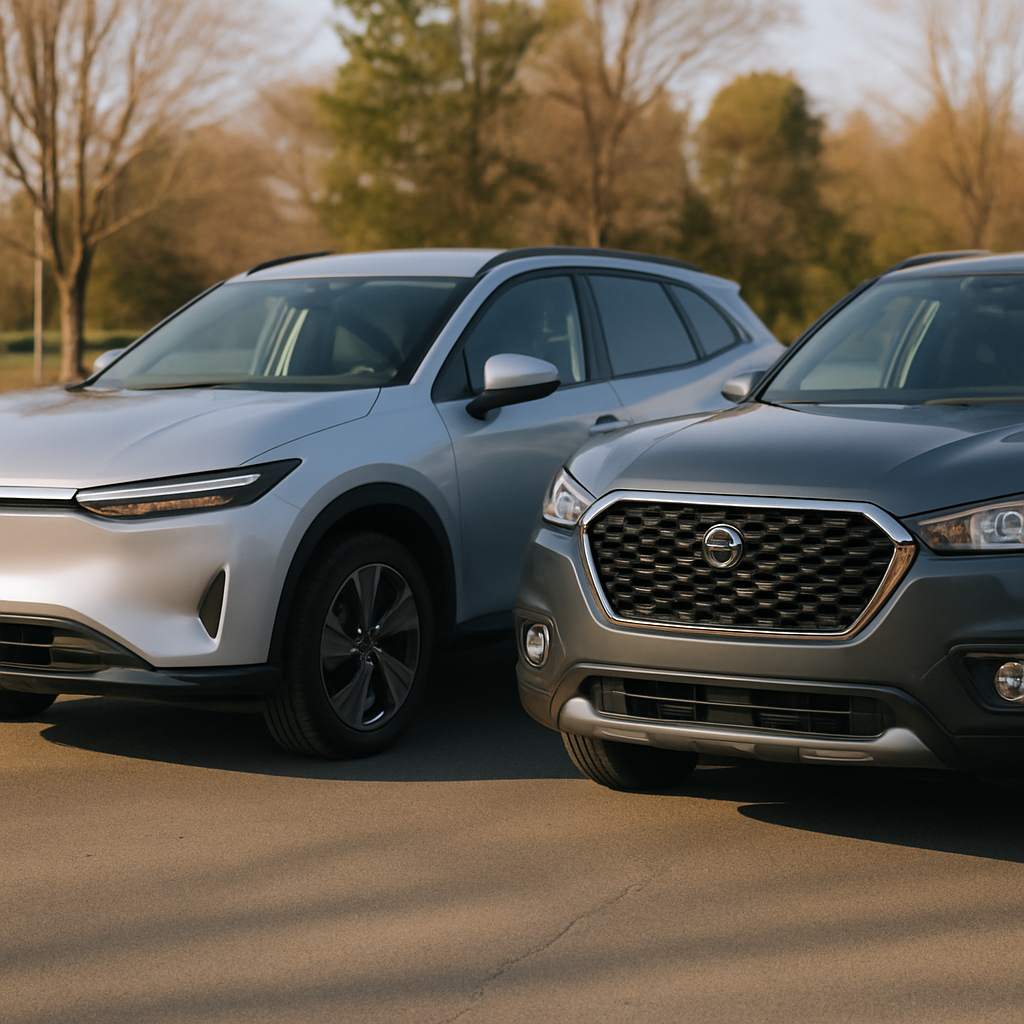
The Mazda CX-50 and Hyundai Tucson present two distinctly different design philosophies that reflect their intended character and market positioning. The CX-50 embraces a rugged, adventure-ready aesthetic that signals its capability beyond paved roads. Its muscular fenders, upright stance, and powerful proportions create an impression of strength and durability.
Mazda designed the CX-50 with outdoor enthusiasts in mind. The vehicle features a longer, flatter roofline that serves both style and function, making it easier to mount and access roof racks for bikes, kayaks, or cargo boxes. Its higher ground clearance (between 8.3-8.6 inches depending on model) further emphasizes its off-road credentials.
In contrast, the Hyundai Tucson takes a dramatically different approach with its sleek, future-forward design language. The Tucson’s most striking feature is its parametric front grille with integrated hidden LED daytime running lights that only become visible when illuminated. This innovative lighting signature continues at the rear with connecting LED tail lamps that span the width of the vehicle.
The Tucson showcases Hyundai’s modern aesthetic with sculpted body panels, sharp character lines, and a more urban-focused design. With 7.1 inches of ground clearance on FWD models (8.3 on AWD), it sits slightly lower than the CX-50, reinforcing its on-road orientation.
| Design Element | Mazda CX-50 | Hyundai Tucson |
|---|---|---|
| Overall Design Philosophy | Rugged, adventure-ready | Contemporary, tech-forward |
| Front Fascia | Bold grille with muscular hood | Parametric grille with hidden LED DRLs |
| Body Profile | Upright stance, pronounced fenders | Sleek lines with geometric sculpting |
| Ground Clearance | 8.3-8.6 inches | 7.1 inches (FWD)/8.3 inches (AWD) |
| Roof Design | Flat, functional for roof accessories | Sloping with optional panoramic sunroof |
| Lighting | Traditional LED arrangement | Distinctive parametric lighting pattern |
The CX-50’s design emphasizes function and capability with practical elements like a low roof height that makes gear access easier. Mazda’s approach focuses on durability with design elements inspired by technical outdoor gear like climbing backpacks and hiking boot laces.
Meanwhile, the Tucson projects a more sophisticated urban presence. Its premium dark chrome accents, available on higher trims, and distinctive lighting signatures make it stand out in parking lots. The Tucson XRT trim does offer more rugged styling with exclusive black side cladding and a more aggressive look, but its overall design remains sleek and contemporary.
Both vehicles showcase their brand identities well. The CX-50 embodies Mazda’s emphasis on driver engagement with a design that promises capability and adventure. The Tucson represents Hyundai’s forward-thinking approach with innovative styling that pushes boundaries. Your preference will likely depend on whether you value the outdoorsy, rugged character of the CX-50 or the modern, tech-forward presence of the Tucson.
What are the differences in ride quality and handling?

When it comes to ride quality, the Hyundai Tucson takes a distinctly different approach than the Mazda CX-50. The Tucson delivers a noticeably cushier, more plush experience on the road. Its suspension system effectively absorbs road imperfections, creating what many reviewers describe as a more comfortable and forgiving ride for passengers.
The seat comfort reinforces this distinction, with the Tucson featuring better-padded seating that provides superior support during longer journeys. This focus on comfort extends to the overall cabin experience, where the Tucson feels more spacious and accommodating, especially for rear passengers who enjoy significantly more legroom than in the CX-50.
On the other hand, the Mazda CX-50 presents a more driver-focused experience. While its ride may feel somewhat stiffer, with more road feedback transmitted to passengers, many drivers appreciate the CX-50’s more connected feel to the road. Think of it as the difference between a plush sofa and a supportive office chair – the Tucson prioritizes softness and comfort, while the CX-50 emphasizes structure and engagement.
| Aspect | Hyundai Tucson | Mazda CX-50 |
|---|---|---|
| Suspension Feel | Softer, more compliant | Firmer, more responsive |
| Ride Comfort | Cushier, absorbs bumps | Stiffer, transmits more road feel |
| Seat Comfort | Well-padded, plush | Firmer, less padding |
| Handling Dynamics | Comfortable but less engaging | More precise, better connected |
In terms of handling, Mazda’s reputation for engaging driving dynamics is evident in the CX-50. Its steering is more precise and responsive, offering better feedback to the driver. The CX-50 also demonstrates superior body control through corners, with less roll and more stability during directional changes. This gives drivers a greater sense of confidence when navigating winding roads or making quick maneuvers.
The Tucson, while competent in handling, prioritizes a smoother ride over sporty dynamics. Its larger turning radius compared to the CX-50 makes it slightly less maneuverable in tight spaces, but the tradeoff is a more relaxed driving experience that many commuters and families will appreciate. The Tucson’s steering is lighter and requires less effort, which some drivers may prefer for daily driving situations.
For those who value driving engagement and a more substantial road feel, the CX-50 will likely be more appealing. However, if your priority is passenger comfort and a more serene cabin experience, especially on longer trips or rough roads, the Tucson’s approach to ride quality offers clear advantages.
How do interior space and features compare?
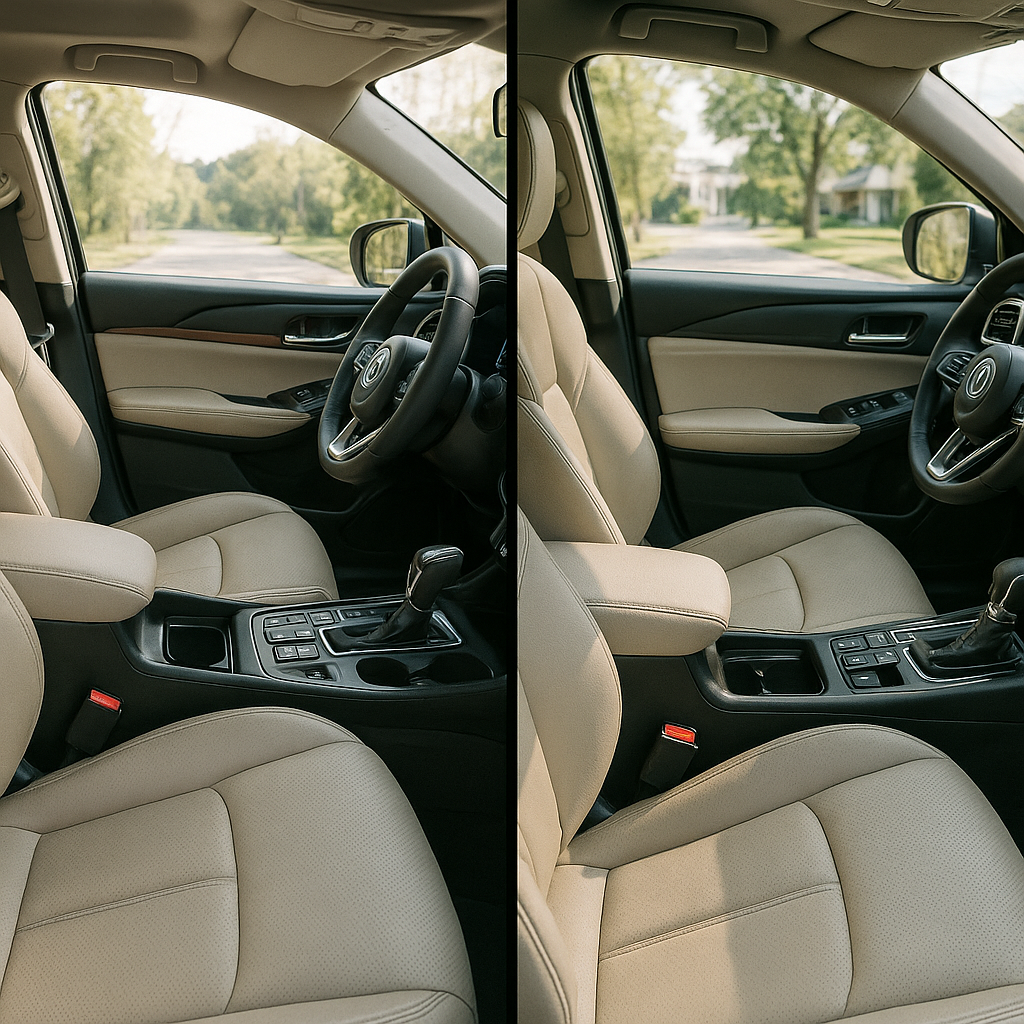
When comparing the interior space between the Hyundai Tucson and Mazda CX-50, the numbers tell a compelling story. The Tucson offers noticeably more room for passengers, with a total passenger volume of 108.2 cubic feet compared to the CX-50’s more confined cabin. This difference is immediately felt when sitting inside both vehicles.
Cabin Space Comparison
The Tucson provides passengers with generous legroom, particularly in the rear where it offers 41.3 inches – significantly more than what you’ll find in the CX-50. This extra space makes the Tucson much more comfortable for adult passengers on longer journeys. Front headroom in the Tucson measures 40.1 inches, ensuring ample space for taller drivers.
Not only does the Tucson win in passenger comfort, but it also excels in cargo capacity. With the rear seats up, the Tucson offers 38.7 cubic feet of cargo space compared to the CX-50’s 31.4 cubic feet. Folding the seats down increases this difference even further, with the Tucson providing 74.8 cubic feet versus the CX-50’s 56.3 cubic feet.
| Interior Dimensions | Hyundai Tucson | Mazda CX-50 |
|---|---|---|
| Cargo Space (seats up) | 38.7 cu. ft. | 31.4 cu. ft. |
| Cargo Space (seats folded) | 74.8 cu. ft. | 56.3 cu. ft. |
| Front Headroom | 40.1 in. | 39.7 in. |
| Rear Legroom | 41.3 in. | 39.6 in. |
| Front Shoulder Room | 57.6 in. | 57.1 in. |
Infotainment and Technology
Both SUVs come equipped with modern infotainment systems, though their implementations differ significantly. The Tucson offers a 12.3-inch touchscreen display on newer models (up from the previously mentioned 10.25 inches), featuring an intuitive interface that’s easy to navigate. The CX-50, meanwhile, comes with a 10.3-inch display that, importantly, is not a touchscreen when driving – it must be controlled via a rotary dial in the center console.
Wireless Apple CarPlay and Android Auto come standard in the Tucson, while the CX-50 typically requires a wired connection in most trim levels. The Tucson also offers a fully digital 12.3-inch instrument cluster on higher trims, creating a more modern, tech-forward cockpit compared to the CX-50’s more traditional gauge setup.
Comfort and Convenience Features
The Tucson edges ahead with several standout features in higher trims, including a panoramic sunroof, ventilated front seats, and heated rear seats. Both vehicles offer heated front seats and steering wheels in their upper trims. The Tucson also provides more charging options with USB-C ports and wireless charging capabilities.
Where the CX-50 distinguishes itself is in its material quality. Many reviewers note that the CX-50’s cabin feels more premium, with better plastics and more attractive trim pieces, even if the overall space feels tighter. The CX-50 also features a more driver-focused cockpit design that some drivers may prefer.
Safety Technology
Both SUVs come well-equipped with advanced safety features. The Tucson offers Hyundai’s SmartSense suite, which includes Forward Collision-Avoidance Assist, Blind-Spot Collision Warning, and Lane Keeping Assist. Higher trims add features like Blind-Spot View Monitor and Surround View Monitor.
The CX-50 counters with Mazda’s i-Activsense safety technology, including similar features plus some unique additions. Both vehicles perform well in safety tests, though specific implementation and effectiveness of these systems may vary based on model year and trim level.
Which offers better fuel economy and performance?
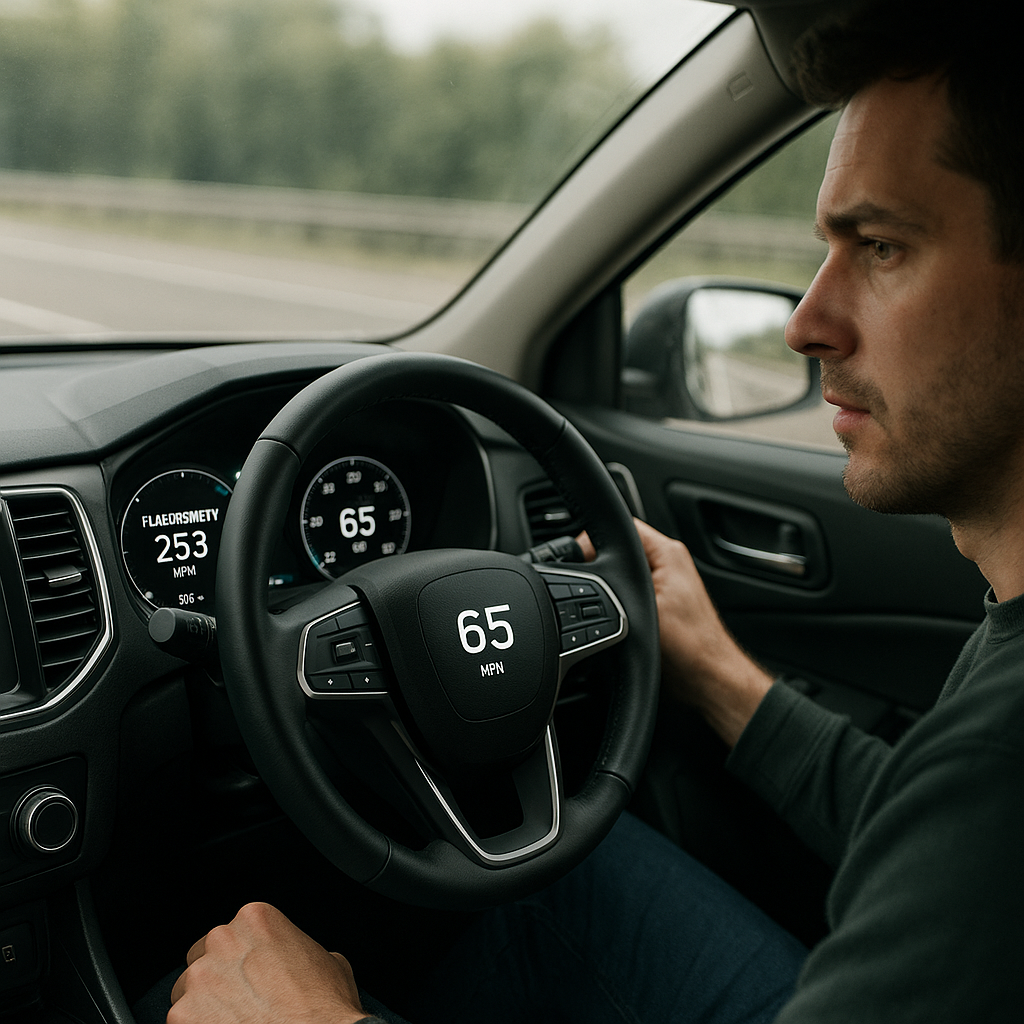
When it comes to fuel economy, the Hyundai Tucson Hybrid clearly outperforms the Mazda CX-50. The Tucson Hybrid delivers an impressive EPA-estimated 38 mpg combined in its base configuration, which is about 40% more efficient than standard gas-powered SUVs in this class. In contrast, the Mazda CX-50’s base 2.5L naturally aspirated four-cylinder engine achieves up to 28 mpg combined with front-wheel drive.
The gap widens even further when considering specific driving conditions. The Tucson Hybrid boasts balanced efficiency with ratings of 38 mpg city and 38 mpg highway in its base trim. The CX-50, while reasonably efficient for a non-hybrid vehicle, returns 24 mpg city and 30 mpg highway in its most efficient configuration. This difference translates to significant savings at the pump – Tucson Hybrid owners can expect to save approximately $575 per year in fuel costs compared to CX-50 owners.
| Vehicle | Combined MPG | City MPG | Highway MPG | Driving Range |
|---|---|---|---|---|
| Mazda CX-50 (Base) | 28 | 24 | 30 | ~400 miles |
| Mazda CX-50 (Turbo) | 25 | 23 | 29 | ~460 miles |
| Hyundai Tucson Hybrid | 38 | 38 | 38 | ~520 miles |
Performance is where the comparison becomes more nuanced. The Mazda CX-50 offers two engine options: a standard 2.5-liter four-cylinder producing 187 horsepower and 185 lb-ft of torque, and an available turbocharged version delivering a robust 256 horsepower and 320 lb-ft of torque on premium fuel. The turbocharged CX-50 demonstrated impressive acceleration in testing, reaching 60 mph in just 6.4 seconds.
The Tucson Hybrid takes a different approach to performance. Its powertrain combines a 1.6-liter turbocharged engine with an electric motor for a total system output of 226 horsepower and 258 lb-ft of torque. While not as powerful as the CX-50’s turbo option, the Tucson Hybrid delivers instant electric torque for responsive acceleration, with 0-60 mph times of around 7.1 seconds – still quick for the segment but not matching the CX-50 Turbo’s sprint.
Driving dynamics also differ significantly between these two models. The CX-50 stays true to Mazda’s reputation for engaging handling with precise steering, a well-tuned chassis, and a traditional six-speed automatic transmission that provides a more direct connection to the powertrain. The CX-50 Turbo even offers paddle shifters for manual control, emphasizing its sportier character.
The Tucson Hybrid, while not as athletically inclined, offers a smooth and refined driving experience. Its six-speed automatic transmission avoids the drone often associated with CVTs in other hybrids. The instant torque from the electric motor provides good low-end responsiveness, making city driving particularly pleasant. The hybrid system also enables quiet electric-only operation in certain conditions, enhancing the premium feel.
Towing capability is another performance consideration. The standard CX-50 can tow up to 2,000 pounds when properly equipped, while the turbocharged version increases capacity to 3,500 pounds. The Tucson Hybrid offers a more modest 1,500-pound towing capacity, reflecting its focus on efficiency rather than utility.
Conclusion: Choosing Between the CX-50 and Tucson
After examining the 2025 Mazda CX-50 and Hyundai Tucson in detail, it’s clear that both vehicles excel in different areas. The Mazda CX-50 stands out with its engaging driving dynamics and more powerful engine options, especially in the turbo variants that deliver up to 256 horsepower. Its rugged, bold styling makes a statement on and off the road, while Mazda’s reputation for quality interior materials gives it a more premium feel.
The Hyundai Tucson, however, takes the lead in practical matters. With significantly more cargo space (80.3 cubic feet versus the CX-50’s 56.3 cubic feet with seats folded), a smoother ride quality, and better fuel economy—particularly in its well-integrated hybrid form—the Tucson proves itself as the more pragmatic choice. Its more spacious interior, especially in the rear seats, makes it ideal for families or those who regularly transport passengers.