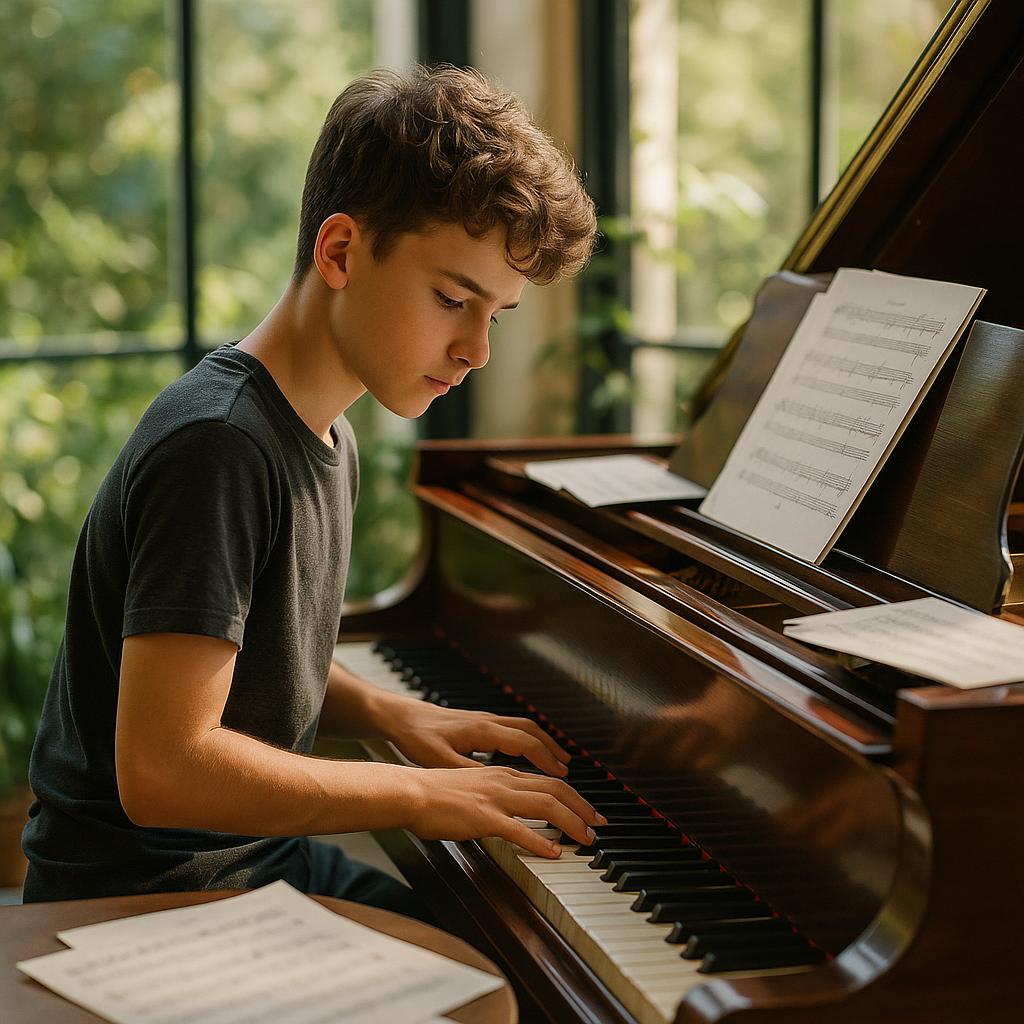
What separates someone who plays piano beautifully at home from a professional pianist performing at Carnegie Hall or teaching at a conservatory? The difference extends far beyond skill at the keyboard. Professional pianists build careers through formal music education, consistent performance opportunities, and strategic planning that hobbyists rarely pursue. While an amateur might spend years perfecting Chopin nocturnes in their living room, a professional must navigate auditions, develop teaching methodologies, and maintain performance-ready technique year-round.
The journey to becoming a professional pianist demands a balanced approach. Most successful pianists earn music degrees from conservatories or universities, where they receive rigorous training in piano performance and music theory. They also develop expertise across diverse musical styles, from classical repertoire to contemporary improvisation. Networking becomes just as important as practicing scales. Building connections with artist management companies, local ensembles, and music schools opens doors that talent alone cannot unlock.
This roadmap outlines the educational requirements, skill development strategies, and varied career opportunities available to aspiring pianists. Whether the goal is becoming a concert pianist, piano instructor, or collaborative musician, understanding these foundational elements creates a clear path forward. The modern music industry offers more possibilities than ever before, but success requires intentional preparation and a comprehensive understanding of what professional piano work truly entails.
Educational Foundations: Degrees and Training

Formal education provides aspiring professional pianists with essential skills that extend far beyond keyboard technique. A Bachelor of Music in Performance builds a comprehensive foundation in music theory, ear training, and performance practice. These programs typically require four years of intensive study. Students develop technical proficiency while learning to interpret repertoire from baroque to contemporary periods. The structured curriculum ensures graduates understand both the artistry and academic rigor required for professional careers.
Graduate programs like the Master of Music take specialization further. These advanced degrees prepare pianists for specific career paths in performance or teaching. Juilliard’s Master of Music program requires applicants to submit a written essay alongside their audition. The essay helps the admissions committee understand how past experiences have shaped each musician’s artistic development. Juilliard does not offer transfer status for graduate students. Anyone enrolled in a Master of Music program elsewhere must start from the beginning if admitted.
Berklee College of Music offers a different approach with its Bachelor of Music in Professional Music. This program requires 120 credits total, including 41 credits of core music courses and 40 credits of liberal arts. Students must declare their major by the third semester and maintain a minimum GPA of 2.0. The curriculum includes a three-course sequence covering entrepreneurship, financial management, and a capstone project. This structure prepares musicians for the business side of professional music careers.
Distinguishing Features of Elite Music Institutions
Juilliard maintains its reputation through rigorous classical training and selective admissions. The school requires proof of English language proficiency from applicants whose native language is not English. Native language is defined as the first language spoken in childhood and the primary language used at home. Certain applicants may qualify for exemptions based on specific criteria outlined in the application. The audition and essay requirements ensure that admitted students possess both technical ability and intellectual depth.
Berklee has expanded its reach through online bachelor of professional studies degrees in music business and music production. As the first non-profit music institution to offer accredited bachelor degrees online, Berklee provides flexibility for students worldwide. The music business degree covers licensing, management, marketing, and touring. Courses focus on mobile music, streaming platforms, funding sources, and revenue development. The music production degree teaches students to work with industry-standard software programs while covering recording, engineering, and mixing techniques.
Both institutions offer unique networking opportunities. Juilliard’s faculty includes accomplished performers with extensive experience in orchestral and solo settings. Berklee’s instructors combine academic expertise with active industry involvement. Students at either school gain access to professional connections that can shape their careers. Performance opportunities range from student recitals to collaborations with visiting artists. These experiences build confidence and prepare musicians for real-world performance demands.
Specialized Training Pathways
Collaborative piano programs address the growing demand for versatile musicians. These specialized tracks train pianists to work in ensemble settings rather than focusing solely on solo performance. Students gain experience accompanying vocalists, instrumentalists, and choirs. They learn to adapt their playing style to different musical contexts. This training makes graduates highly marketable in educational institutions, opera companies, and orchestral settings.
The Berklee Professional Music program emphasizes entrepreneurial skills alongside musical development. Students learn to lead creative projects from conception to execution. The curriculum requires them to integrate their principal instrument into various contexts. Graduates develop the ability to combine multiple areas of expertise into customized career plans. This approach recognizes that modern musicians often build portfolio careers rather than following traditional performance-only paths.
| Institution | Program Focus | Key Requirements | Unique Features |
|---|---|---|---|
| Juilliard | Classical Performance | Written essay, audition, English proficiency | No graduate transfer credits accepted |
| Berklee | Professional Music (Performance & Business) | 2.0 GPA, major declaration by third semester | Online bachelor degrees available |
| Collaborative Piano Programs | Ensemble Performance | Experience in orchestral, choral, and chamber settings | Enhanced marketability across multiple contexts |
Advanced degrees like the Doctor of Musical Arts position pianists for academic careers. These terminal degrees typically require original research, recitals, and a dissertation. Candidates develop expertise in specific repertoire or pedagogical approaches. Juilliard encourages students already enrolled in Master of Music programs elsewhere to complete those degrees before applying for doctoral study. This policy reflects the school’s commitment to thorough preparation at each educational level.
Music education pathways prepare pianists to teach at various levels. Some programs combine performance training with pedagogical coursework. Students learn teaching methods, curriculum development, and studio management. They gain practical experience through supervised teaching opportunities. This dual focus allows graduates to maintain active performance careers while building teaching practices. The combination provides financial stability and artistic fulfillment.
Community engagement has become an integral part of music education. Berklee’s Professional Music program develops student awareness of community involvement across their areas of study. Graduates learn to design outreach programs and educational workshops. They understand how to make music accessible to diverse populations. This training reflects the evolving role of professional musicians in society. Performance skills alone no longer suffice for sustainable careers in today’s music landscape.
Developing Technical Proficiency and Repertoire

Building a strong technical foundation is essential for pianists aiming to reach professional levels. Without proper technique, even the most musically gifted players will struggle with advanced repertoire and risk physical strain. Technical proficiency allows pianists to express musical ideas effectively while bringing out the dynamics and nuances that make performances compelling. A solid grasp of piano technique also prevents injuries like forward-head posture and headaches that result from improper playing habits.
Mastering Technical Exercises and Etudes
Technical exercises form the backbone of piano development. Scales, arpeggios, and complex rhythms should be practiced regularly with a metronome to develop precision and timing. Starting at a slow tempo allows pianists to focus on accuracy before gradually increasing speed. Setting specific goals for each practice session, such as synchronizing every note with the metronome or maintaining a relaxed wrist, helps track progress and maintain focus.
Etudes from composers like Chopin provide targeted technical challenges while remaining musically satisfying. These studies address specific aspects of piano playing, from finger independence to dynamic control. By incorporating etudes into regular practice, pianists simultaneously develop technique and expand their performance repertoire. These pieces showcase the fundamental building blocks of piano mastery.
Breathing techniques often get overlooked but play a crucial role in piano performance. Pianists should remember to breathe naturally while playing, allowing the body to remain relaxed and responsive. This simple practice reduces tension and improves overall fluency at the keyboard.
Building a Diverse and Strategic Repertoire
A well-rounded repertoire serves multiple purposes beyond simply knowing more pieces. It provides a clear indicator of technical level and musical development over time. As pianists advance, their repertoire naturally trends toward more complex and demanding works, though maintaining accessible pieces remains important for versatility.
Including at least one work from J.S. Bach or other Baroque composers strengthens fundamental skills regardless of playing level. Baroque repertoire perfects control, articulation, and rhythmic precision. These pieces may not always make it into public performances, but they serve as essential practice material that elevates overall playing ability. Works by Handel or Purcell offer similar technical benefits for those who prefer alternatives to Bach.
Diversifying across musical periods and styles ensures flexibility in various performance settings. Classical pianists might include pieces from Baroque, Classical, and Romantic eras, while those interested in contemporary music could blend jazz pieces with minimalist compositions. Exploring lesser-known composers like Jan Ladislav Dussek, Muzio Clementi, Amy Beach, or Edward MacDowell allows pianists to discover hidden gems and make pieces distinctly their own.
Expanding Beyond Classical Boundaries
Modern audiences expect versatility that extends beyond traditional classical repertoire. Supplementing classical training with jazz, rock, or multimedia production skills opens new professional opportunities. Understanding music theory across genres enhances sight-reading ability and makes tackling unfamiliar sheet music significantly easier. This cross-genre knowledge allows pianists to adapt quickly to different musical contexts.
Different schools of piano pedagogy, such as the Russian School, offer unique stylistic approaches and technical methods. Exposure to varied pedagogical traditions enriches a pianist’s understanding of the instrument and expands interpretive possibilities. This holistic method of study creates more complete musicians capable of approaching repertoire from multiple perspectives.
Working with Teachers for Personalized Development
Private piano teachers provide invaluable guidance in selecting appropriate repertoire for each developmental stage. Experienced instructors identify which pieces suit individual skill levels and learning goals. They also offer targeted exercises to address specific technical challenges within chosen repertoire, accelerating progress through personalized attention.
Teachers help structure effective practice sessions and maintain momentum through consistent feedback. They recognize when students are ready to tackle more advanced pieces and can suggest transitional works that bridge technical gaps. This mentorship prevents frustration from attempting overly difficult material while ensuring students remain appropriately challenged. Regular lessons create accountability and provide external perspective on progress that self-directed practice cannot replicate.
Building Your Experience and Network

Practical experience is the foundation of a successful piano career. Starting small allows you to develop confidence and refine your skills in real-world settings. Community venues provide ideal first steps for building both your repertoire and reputation as a reliable performer.
Starting Small in Your Local Community
Local opportunities are everywhere once you know where to look. Volunteer to perform at charity events or community centers to gain valuable stage time. These low-pressure environments help you develop comfort with live performance while serving your community.
Check Facebook pages and local venue websites to discover performing opportunities in your area. Coffee shops, retirement homes, and library events often welcome pianists. Each performance adds to your experience and helps you build a portfolio of work you can reference later.
Churches frequently need pianists for services and special events. Wedding ceremonies and receptions offer another steady source of performance opportunities. These gigs provide consistent practice in reading music quickly and adapting to different musical styles.
Expanding to Larger Venues and Events
As your confidence grows, seek out more prestigious performance settings. Local music festivals and recitals put you in front of larger audiences. Participation in these events significantly enhances your visibility within the local music scene.
Musical theatre productions and ensemble playing create opportunities to collaborate with other musicians. These experiences teach you to blend with other instruments and follow a conductor. The skills you develop in ensemble settings make you a more versatile and sought-after pianist.
Recording sessions represent another avenue for growth. Even small-scale studio work helps you understand professional recording standards. These experiences demonstrate your ability to deliver polished performances under technical constraints.
Building Professional Connections
Every performance is a networking opportunity. The musicians you work with can bring additional gigs to you over time. Some connections will become critical professional references as your career develops.
Connect with local music educators through school performances or by offering accompaniment services. Teachers actively seek reliable pianists for student recitals and competitions. Building relationships with educators can lead to steady work and introductions to other music professionals.
Join local music communities both online and in person. Your state’s music educator association likely hosts conferences and events. These gatherings concentrate large numbers of music professionals in one place, making them efficient for expanding your network.
Leveraging Online Platforms
Social media platforms extend your reach beyond your immediate community. Share videos of your performances on platforms where musicians gather. High-quality recordings give potential clients and collaborators a preview of your abilities.
Create professional profiles that showcase your work and experience. Include your performance history and musical specialties. Consider making business cards with a QR code linking to your best recordings so people can easily remember and contact you.
Online performance platforms open up entirely new revenue streams. Virtual concerts and recorded sessions reach audiences far beyond your local area. These digital opportunities complement your in-person performances and build your overall visibility as a concert pianist.
Being proactive in your community consistently leads to larger opportunities. Each small gig builds your reputation and expands your professional circle. The connections you make during local performances often evolve into collaborative projects and more significant engagements that sustain a long-term career.
Exploring Diverse Career Pathways

A professional pianist’s career rarely follows a single track. Most successful pianists blend multiple roles to create sustainable income streams and maintain artistic fulfillment. This multifaceted approach provides financial stability while keeping work engaging and varied. The modern music landscape offers pianists more career options than ever before, from traditional concert halls to digital platforms.
Building a portfolio career means strategically combining different music-related roles. One pianist might teach private lessons during weekdays, accompany dance classes on evenings, and perform weekend church services. Another might balance university teaching with freelance recording sessions and online course creation. This flexibility allows pianists to adapt their schedules to personal needs while maximizing earning potential.
Performance Opportunities
Concert pianists represent the most visible career path, performing solo recitals and concertos with orchestras. This traditional route demands exceptional technical skill and significant name recognition. However, performance opportunities extend far beyond the concert stage.
Many pianists find steady work as collaborative musicians. They accompany vocalists, instrumentalists, and ensembles in rehearsals, lessons, and performances. Dance schools, churches, and community choirs regularly employ pianists for classes and services. Some collaborative pianists specialize in specific areas like opera rehearsals, choral accompaniment, or chamber music.
Professional chamber musicians build careers performing with established ensembles. These positions often combine rehearsal work, concert series, and educational outreach. Summer music festivals provide seasonal employment for collaborative pianists, offering intensive performance experience and networking opportunities.
Teaching and Academic Positions
Private piano teaching offers schedule flexibility and personal autonomy. Teachers work from home studios, rent professional spaces, or provide online lessons through video platforms. This career path allows pianists to set their own rates and choose their student demographics.
University positions provide more structure and benefits. Staff pianists work in music departments accompanying student lessons, rehearsals, and performances. These roles typically require strong sight-reading abilities and collaborative skills. University professor positions demand advanced degrees, usually a doctorate, to teach private lessons, music theory, and other specialized courses.
Academic institutions increasingly value collaborative piano as a distinct specialization. Programs train pianists specifically in ensemble playing, offering assistantships that provide practical experience. Students accompany opera rehearsals, voice lessons, instrument lessons, and orchestras as part of their training. This broad exposure makes graduates more marketable across multiple employment sectors.
Freelance and Entrepreneurial Paths
Freelance pianists build careers by combining various independent projects. They might play lessons, rehearsals, concerts, and musicals within their local communities. Churches, schools, and regional choirs regularly hire freelance accompanists. Success in freelancing depends heavily on location, professional connections, and reputation.
Music directors manage musical aspects of productions, choirs, or organizations. These positions involve selecting repertoire, conducting rehearsals, and coordinating performances. The role blends musical expertise with organizational leadership, offering pianists a path beyond pure performance.
Some pianists establish their own businesses. Opening a music school, running a recording studio, or creating online piano courses requires business acumen and startup capital. These ventures demand marketing skills and organizational ability but offer complete professional autonomy. Successful music entrepreneurs create community impact while building sustainable income.
Emerging Digital and Media Opportunities
Technology has opened new career pathways for pianists. Recording artists work in studios creating tracks for albums, films, and digital media. Studio musicians need versatility across genres and excellent sight-reading skills. These sessions often pay well but require adaptability and professionalism.
Online piano academies represent a growing sector. Pianists create video courses, live-stream lessons, and build subscriber communities. This digital teaching model reaches global audiences and generates passive income through course sales. Content creation requires technical skills beyond piano playing, including video production and online marketing.
Composers and arrangers write original music or adapt existing pieces for different ensembles. This creative work spans classical composition, commercial jingles, film scoring, and popular music production. Many composers combine writing with other musical activities to maintain steady income.
| Career Path | Primary Activities | Typical Requirements | Income Model |
|---|---|---|---|
| Private Teaching | Individual lessons, recital preparation | Performance degree, teaching experience | Hourly rates, flexible schedule |
| University Professor | Teaching, research, performing | Doctorate degree, publication record | Salary, benefits, tenure track |
| Collaborative Pianist | Accompanying lessons, rehearsals, performances | Strong sight-reading, ensemble skills | Per-service fees, contracts |
| Music Director | Programming, conducting, administration | Leadership skills, musical expertise | Salary or contract basis |
| Recording Artist | Studio sessions, album production | Genre versatility, technical precision | Session fees, royalties |
| Online Academy | Course creation, digital instruction | Tech skills, marketing knowledge | Subscription or course sales |
Building a Sustainable Portfolio Career
Successful pianists strategically combine roles that complement each other. Teaching provides stable weekly income while performing maintains artistic vitality. Accompanying work builds community connections that lead to additional opportunities. This diversification protects against income fluctuations when one revenue stream slows.
Geographic location significantly impacts available opportunities. Larger metropolitan areas offer more performance venues, schools, and recording studios. However, smaller communities may have less competition for teaching students and church positions. Choosing a location wisely and developing local professional networks enhances career prospects regardless of market size.
Essential skills for portfolio careers extend beyond piano technique. Sight-reading ability opens collaborative opportunities. Language knowledge in French, German, Italian, and English helps when accompanying vocalists. Interpersonal skills and professionalism determine whether musicians receive repeat engagements and referrals. Business skills become crucial when managing multiple income streams and marketing services.
The non-traditional schedule of professional musicians suits some lifestyles better than others. Evening and weekend work is common, particularly for performers. Teaching schedules can be structured around personal preferences, with some teachers working mornings and others preferring afternoons. This flexibility appeals to pianists who value autonomy over conventional work hours.
Embracing Your Piano Journey

Becoming a professional pianist requires more than technical mastery. It demands consistent practice, strategic career planning, and genuine passion for the craft. Building a sustainable music career means combining performance skills with practical considerations like reliable transportation, professional correspondence, and personal branding through social media platforms. Success often comes from embracing your authentic musical voice rather than trying to fit a prescribed mold.
The path forward involves leveraging both traditional and modern opportunities. Recording your repertoire and sharing it on platforms like YouTube, Instagram, and Spotify helps build visibility and can attract agents or gig opportunities. Engaging with local and online music communities through workshops and collaborative projects strengthens your network while deepening your understanding of piano performance. Whether you choose teaching, performing, or a combination of both, maintaining professional relationships and staying adaptable to technological advancements will sustain your career as a pianist in today’s evolving music landscape.