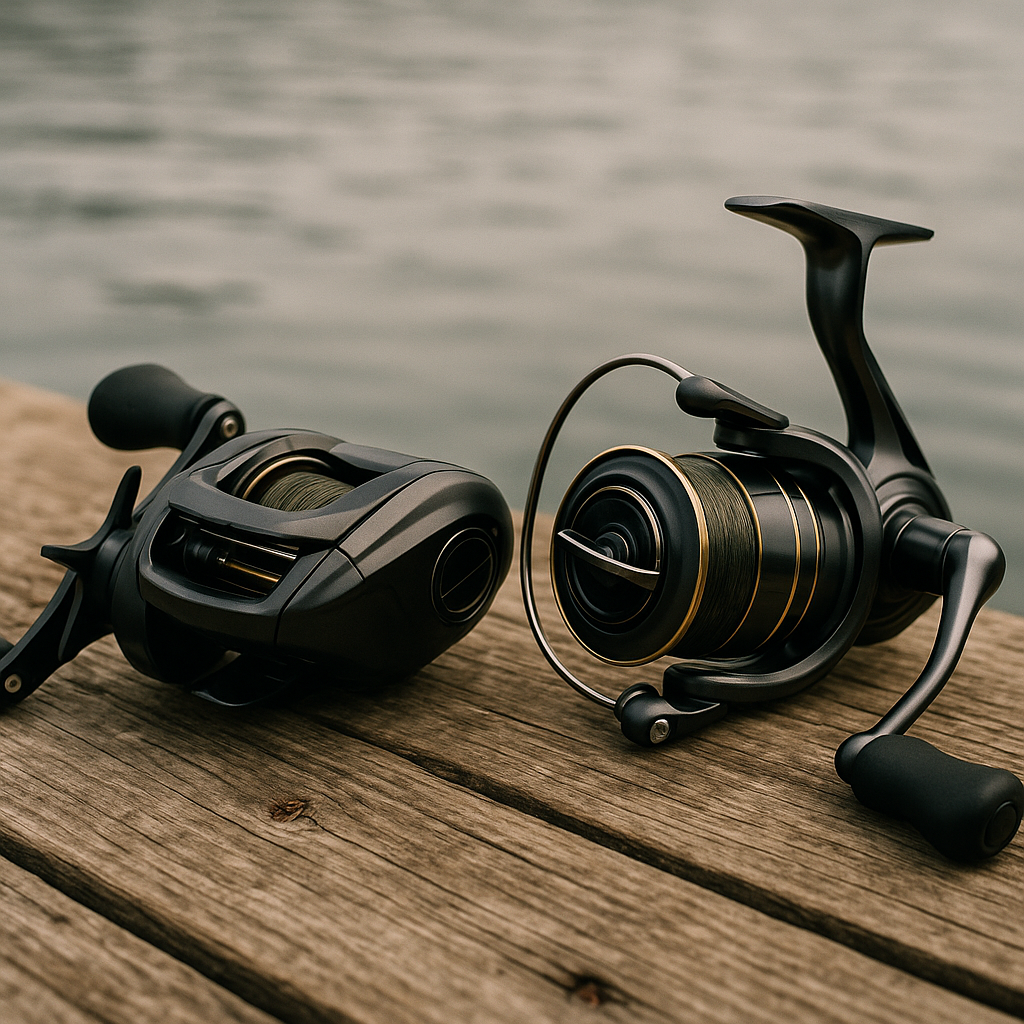
Which fishing reel should you choose when two industry giants offer seemingly identical quality and performance? Shimano and Daiwa are two Japanese giants dominating the fishing reel market for decades. Both brands have earned their reputation through innovative engineering and consistent quality that satisfies everyone from weekend anglers to professional fishing guides.
Both brands offer high-quality reels with similar materials and functionality, yet key differences in smoothness, durability, pricing, and sealing technology set them apart. Shimano reels typically excel in smooth casting and cranking power, making them popular choices for baitcasting reels. Daiwa reels are renowned for their robustness and superior corrosion resistance, particularly in their spinning reels designed for saltwater applications.
Understanding these distinctions helps anglers choose the reel that best matches their skill level and fishing conditions. The choice between these Japanese fishing brands often comes down to personal preference and specific fishing needs. This comparison matters because selecting the right fishing equipment can significantly impact your success on the water and your overall fishing experience.
What Are the Key Price and Value Considerations?

Shimano reels typically cost 15-20% more than comparable Daiwa models across most price ranges. This pricing difference reflects Shimano’s focus on premium materials and refined manufacturing processes. Daiwa offers competitive performance at lower price points, making their reels attractive for budget-conscious anglers.
Entry-level reels show the most significant value differences between brands. Daiwa’s Regal LT series starts around $80, while comparable Shimano models begin near $120. Both brands deliver reliable performance at these price points, but Daiwa provides more features per dollar in the budget segment.
Investment quality becomes more apparent in mid-range and high-end models. Shimano’s engineering advantages justify higher costs through superior drag systems and longer service life. The brand’s flagship Stella SW C series commands $1,050-$1,450, while Daiwa’s top-tier Saltiga models range from $1,100-$1,200.
| Price Range | Daiwa Models | Shimano Models | Value Leader |
| Entry-Level ($80-150) | Regal LT ($80-90) | Sienna ($90-120) | Daiwa |
| Mid-Range ($200-400) | BG ($200-260) | Vanford FA ($285-295) | Daiwa |
| High-End ($500-700) | Certate LT ($570-630) | Stella FJ ($650-750) | Even |
| Premium ($1000+) | Saltiga ($1,100-1,200) | Stella SW C ($1,050-1,450) | Daiwa |
Beginner gear decisions favor Daiwa’s affordability without sacrificing essential features. New anglers can access quality reels without large upfront investment. Experienced anglers often prefer Shimano’s durability advantages, especially for intensive fishing applications.
Long-term ownership costs shift the value equation toward Shimano. Their reels typically require fewer repairs and maintain smooth operation longer. This durability translates to better cost per fishing hour over several seasons of regular use.
Which Technical Specifications Matter Most?

Technical specifications determine a reel’s performance far more than brand loyalty. Smart anglers focus on measurable features rather than marketing claims. Understanding these specs helps you choose equipment that matches your fishing style and target species.
Gear Ratio and Retrieve Rate
Gear ratio controls how fast you retrieve line with each handle turn. A 6.2:1 ratio means the spool rotates 6.2 times per handle revolution. Most spinning reels range from 5.2:1 to 6.2:1, though some manufacturers now offer 7.0:1 models for bass fishing applications.
Fast ratios work best for techniques requiring quick line pickup. Slower ratios provide more torque for fighting large fish. The retrieve rate, measured in inches per crank, directly relates to gear ratio and affects your fishing efficiency.
Ball Bearings and Smoothness
Ball bearings reduce friction within the reel mechanism. Quality matters more than quantity here. Three high-grade sealed bearings outperform ten cheap open bearings. Most reels contain 3 to 11 bearings, with 5 to 7 being adequate for freshwater fishing.
Sealed bearings resist corrosion better than shielded or open designs. They cost more initially but last longer in harsh conditions. Saltwater fishing demands sealed bearings for extended reel life.
Line Capacity and Reel Weight
Line capacity determines how much fishing line fits on the spool. Manufacturers list this as pound test and yardage combinations. A 2500 size reel might hold 200 yards of 10-pound monofilament or 275 yards of 10-pound braid.
Reel weight affects casting comfort and rod balance. Lightweight reels reduce fatigue during long fishing sessions. However, heavier reels often feature more durable construction and smoother drags.
| Specification | Freshwater Range | Saltwater Range | Impact on Performance |
|---|---|---|---|
| Gear Ratio | 5.2:1 to 6.2:1 | 5.0:1 to 7.1:1 | Retrieval speed and power |
| Ball Bearings | 5-10 | 8-15 (sealed) | Smoothness and durability |
| Max Drag | 10-25 lbs | 20-40 lbs | Fish fighting capability |
| Line Capacity | 150-250 yards | 200-350 yards | Casting distance and backup line |
| Weight | 6-10 oz | 8-14 oz | Balance and fatigue reduction |
Drag System Performance
Maximum drag rating indicates the reel’s stopping power when fully tightened. Most freshwater reels offer 10 to 25 pounds of drag. Saltwater models typically provide 20 to 40 pounds or more.
Drag smoothness prevents line breaks during fish runs. Carbon fiber and felt washers create consistent pressure. Multiple disc systems distribute heat better than single-disc designs.
Corrosion Resistance Features
Saltwater environments demand special protection. Anodized aluminum bodies resist corrosion better than painted surfaces. Stainless steel components last longer than standard steel parts. Sealed construction keeps moisture away from internal mechanisms.
Freshwater reels need less protection but benefit from corrosion-resistant materials. Even small lakes contain minerals that can damage unprotected metal surfaces over time.
Maintenance Requirements
Preventative maintenance extends reel life significantly. Clean your reel after each saltwater session with fresh water. Remove line annually and inspect for wear. Lubricate moving parts according to manufacturer guidelines.
Quality reels tolerate minor neglect better than cheap models. However, regular care prevents small problems from becoming expensive repairs. Keep spare parts on hand for frequently replaced items like drag washers and bail springs.
Beginners should prioritize proven designs over cutting-edge features. Start with mid-range reels that offer good value and reliability. Learn which specifications matter most for your preferred fishing methods before upgrading to premium models.
What Do Real Users Say About Each Brand?

User experiences reveal consistent patterns across the angling community. Many experienced anglers choose Shimano baitcasters for their smooth casting and exceptional cranking power. A tackle shop operator with years of field experience notes that Shimano baitcasters deliver unmatched smoothness during casting operations and provide superior cranking power when fighting larger fish.
Daiwa spinning reels earn praise for their robustness and superior corrosion resistance, particularly in saltwater fishing environments. Real-world testing shows these reels maintain consistent performance even after extended exposure to harsh saltwater conditions. Users consistently report that Daiwa spinning reels handle the demanding conditions of saltwater fishing better than most competitors.
Shimano historically dominated line management and wind knot prevention technology. Veteran anglers credit Shimano with developing superior line lay systems that significantly reduce wind knots and improve casting distance. However, recent Daiwa models like the 2019 Certate LT and 2023 Saltiga have closed this performance gap substantially.
The 2019 Certate LT introduced advanced line management features that match Shimano’s performance standards. The 2023 Saltiga further refined these improvements with enhanced rotor design and improved bail systems. Users report that these newer Daiwa models now compete directly with Shimano’s best offerings in line management.
Personal preference and specific use cases ultimately determine the best choice for individual anglers. Beginners often find both brands equally satisfying, while experienced professionals develop brand loyalty based on their fishing style and target species. Both Shimano and Daiwa consistently deliver comparable quality that meets the demanding standards of tournament fishing.
Angler preferences often split along reel type lines rather than brand loyalty alone. Many professional anglers maintain mixed tackle boxes, selecting Shimano baitcasters for precision applications and Daiwa spinning reels for heavy-duty saltwater work. This approach maximizes fishing experience by leveraging each brand’s specific strengths.
Making Your Choice: Which Brand Fits Your Fishing Needs?
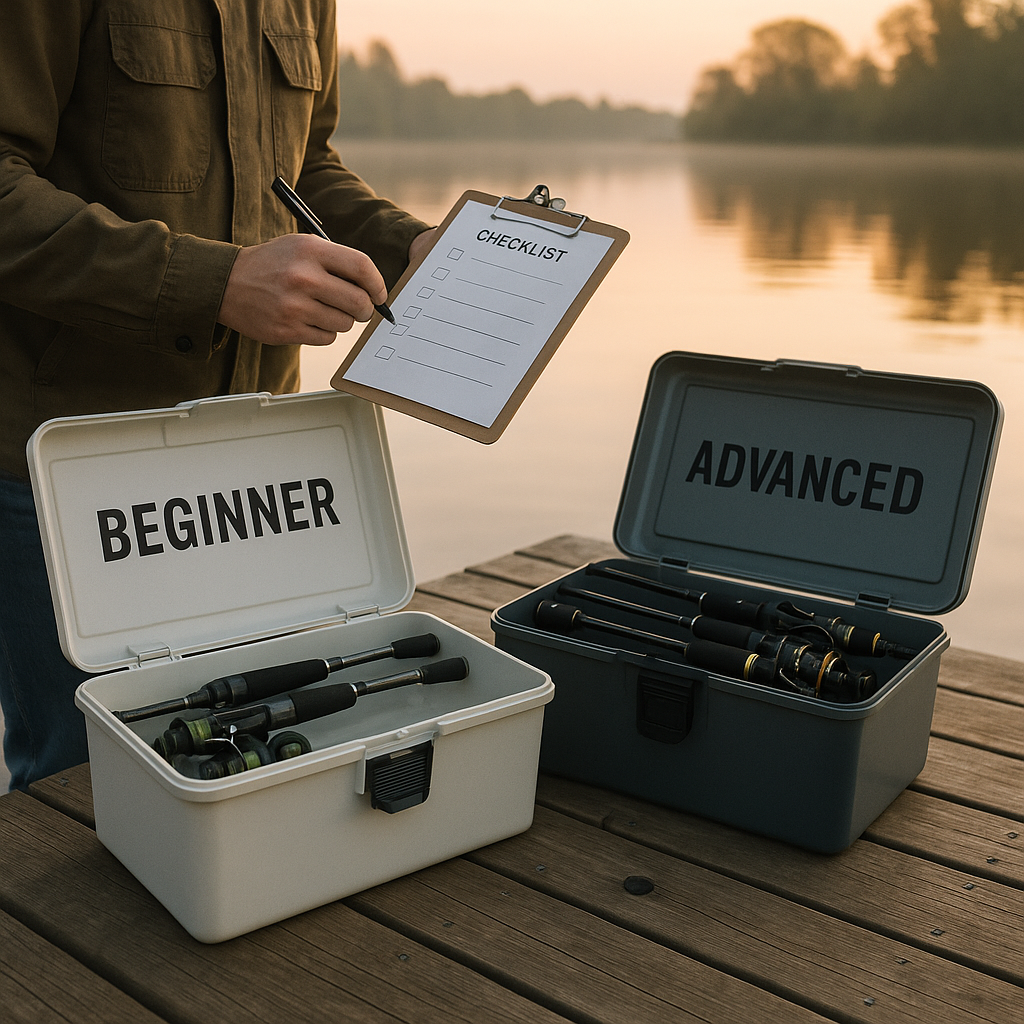
Choosing between Shimano and Daiwa ultimately depends on personal preference, skill level, and fishing style. Beginners benefit from Daiwa’s practical, affordable options that don’t sacrifice quality. Experienced anglers may prefer Shimano’s subtle advantages in smoothness and durability developed over years of fishing.
Both brands offer reliable alternatives like Ryobi for those seeking quality at accessible prices. No single brand is definitively better. Both deliver excellent performance. Focus on specifications that match your fishing technique, maintain your equipment properly, and choose the brand that feels right for your style.